For many students, it is the first time living away from home, making their own schedules, meeting entirely new people, going to their first college parties, joining organizations, dating, exploring relationships, and figuring out who they are as young adults.
There is a lot to be excited about. But there is also a period of the college year when sexual violence tends to increase. It is commonly known as the “Red Zone.”
What is the Red Zone?
The Red Zone generally refers to the period from the beginning of the fall semester through Thanksgiving break. Research and campus safety organizations have identified this as a period when sexual assaults on college campuses occur at disproportionately high rates, with some commonly cited research finding that more than half of campus sexual assaults occur during this period.
That statistic can be alarming, but understanding why this period can carry increased risk is more useful than simply being afraid of it.
The beginning of the school year brings together a unique combination of circumstances: new students, new social environments, increased parties and social events, unfamiliar surroundings, and opportunities for people to take advantage of others.
And for many students, it is their first time navigating these situations independently.
Why does the risk increase?
New environments and new independence
For first-year students and transfers especially, college can mean entering an entirely unfamiliar environment. Students may not know the campus very well yet, may not know which resources are available to them, and may still be figuring out who they can trust.
At the same time, students are often experiencing a new level of independence. There may be fewer familiar adults around, fewer established routines, and more opportunities to make decisions for themselves.
That independence is a good thing. But learning how to navigate new environments and relationships takes time.
More social events and parties
The beginning of the semester is packed with opportunities to meet people. Welcome events, parties, Greek recruitment, sporting events, gatherings with friends, and other activities can make the first weeks of college incredibly exciting.
They can also mean increased access to alcohol and other substances.
Alcohol itself does not cause sexual assault. People who drink are not responsible for someone else’s decision to sexually assault them. But alcohol can affect someone’s ability to communicate, recognize danger, make decisions, or give consent –and someone who is significantly impaired may be unable to consent to sexual activity.
To be very clear: alcohol does not cause rape. People who choose to sexually assault others cause rape. Alcohol may be used by perpetrators to facilitate sexual assault because intoxication can make someone more vulnerable, impair their ability to communicate or resist, or make it easier for someone to ignore their boundaries. That is a choice made by the perpetrator – not by the person who decided to have a drink.
You should be able to go to a party, have a few drinks, dance, flirt, meet someone new, or simply have fun with your friends without expecting that you might be sexually assaulted. Choosing to drink is never an invitation to be assaulted, and being intoxicated never makes someone responsible for another person’s decision to harm them.
Social pressure and changing boundaries
College is a time when many people are figuring out what they want in friendships, dating, sex, and relationships.
Students may feel pressure to fit in, impress their peers, seem experienced, or go along with something because they don’t want to make a situation awkward.
But you never owe anyone sexual attention, affection, or access to your body.
And consent isn’t something that you give once and then automatically give forever.
Consent should be freely given, informed, and ongoing. It can be withdrawn at any time, and consenting to one sexual activity does not mean consenting to another. A previous relationship, flirting, kissing, or having sex in the past does not automatically mean someone has consented to sex now.
Predatory behavior
It is also important to acknowledge something that conversations about the Red Zone sometimes overlook: some people intentionally take advantage of vulnerable situations.
A person who targets someone who is intoxicated, isolated, new to campus, unfamiliar with their surroundings, or otherwise vulnerable is responsible for that choice.
Sexual assault is not caused by a student’s outfit, their decision to attend a party, how much they drank, whether they flirted with someone, or whether they went home with someone.
The responsibility belongs to the person who chose to violate another person’s boundaries.
Let’s talk about alcohol – and some common myths
Alcohol frequently becomes part of conversations about sexual assault on college campuses, and it is important to separate facts from victim-blaming myths.
Myth: “If someone gets drunk and something happens, they should have known better.”
Fact: Being drunk does not give someone else permission to sexually assault you. A person who is significantly intoxicated may be unable to give meaningful consent. Voluntarily drinking alcohol does not transfer responsibility for another person’s actions onto the person who was drinking.
Myth: “If they were drinking, they consented to sex.”
Fact: Drinking is not consent. Neither is flirting, kissing, dancing, going to someone’s room, or agreeing to one sexual activity. Consent has to be present for the specific sexual activity taking place.
Myth: “If they don’t say no, that means they said yes.”
Fact: Consent is more than the absence of a “no.” It should be an active, freely given yes. If someone is unconscious, asleep, or too intoxicated to understand what is happening or communicate a choice, they cannot provide meaningful consent.
Myth: “If someone really didn’t want it, they would fight back.”
Fact: People respond to traumatic situations in many different ways. Fighting back is not a requirement for something to be sexual assault. Someone may freeze, become quiet, try to appease the person hurting them, or be physically unable to respond.
And perhaps the most important fact of all:
Nothing someone does makes them responsible for being sexually assaulted.
So, what can we actually do?
Knowing about the Red Zone isn’t about telling college students to stop having fun.
It’s about giving students the information they need to make informed decisions, recognize unhealthy or unsafe situations, and look out for one another.
Know what consent looks like.
Ask.
Listen to the answer.
Respect the answer.
Check in when circumstances change.
And remember that consent can be withdrawn at any time.
If you’re unsure whether someone is able to consent, pause. Sex is never so urgent that you can’t wait for a clear, enthusiastic yes.
Look out for your friends.
If you notice a friend who seems uncomfortable, extremely intoxicated, separated from their friends, or being pressured by someone, check in.
You don’t have to be a hero or put yourself in danger. Sometimes intervention can be as simple as:
“Hey, want to come with us?”
“Are you okay?”
“Do you want me to stay with you?”
“Let’s get you home.”
Looking out for each other is everyone’s responsibility.
Know where your resources are.
Before you need them, find out what resources are available on your campus and in your community.
Know where you can go if you experience sexual assault, dating violence, stalking, harassment, or another form of harm. Save important phone numbers in your phone. Learn whether your campus has confidential advocates (at FHSU, CCC, and FHSU Tech NC & FHSU Tech NW – you do!), counseling services, medical resources, or Title IX support.
And remember: you do not have to know exactly what happened or what you want to do next before reaching out for help.
If something happens to you
If you experience sexual assault or another form of sexual violence, it is not your fault.
You don’t have to prove that what happened was “bad enough.” You don’t have to have made perfect choices. You don’t have to remember every detail. You don’t have to report to law enforcement to deserve support.
And you don’t have to figure everything out alone.
Options Domestic & Sexual Violence Services is here to support survivors. Our advocates can provide confidential support, help you understand your options, connect you with resources, and walk alongside you as you decide what comes next. Anniston, our Community Engagement and Sexual Violence Response Coordinator has office hours on FHSU campus every first and third Thursday of the month, and every second and fourth Thursday at CCC. She is also available at any time upon request to meet with you.
College should be a time to explore – not a time to live in fear.
The Red Zone is important to understand, but it shouldn’t define the college experience.
College can be fun. It can be messy and exciting and confusing and transformative. You get to meet new people, try new things, make mistakes, build relationships, discover what you like, and figure out who you are.
Consent should be part of that exploration.
Knowing how to communicate your boundaries (and respect someone else’s) isn’t about taking the fun out of college. It’s about making sure everyone has the freedom to enjoy their experiences without having their boundaries violated.
So as another school year begins, let’s talk about consent. Let’s look out for our friends. Let’s challenge victim-blaming when we hear it. Let’s make sure students know where to go for help.
And most importantly, let’s create college communities where everyone understands one simple thing:
Your body belongs to you. Their body belongs to them. Consent matters.
If you need any additional information, have a question, or have a concern, feel free to reach out to Options at our 24-hour toll-free helpline 800-794-4624. You can also reach an advocate via text by texting HOPE to 847411 or clicking 24-Hour Chat with Options.
Written by Anniston Weber
This grant project is supported by the State General Fund for Domestic Violence and Sexual Assault, sub-grant number 26-SGF-07, as administered by the Kansas Governor’s Grants Program. The opinions, findings, conclusions or recommendations expressed in this publication are those of the author(s) and do not necessarily reflect the views of the Office of Kansas Governor.
“People tell me I should be happy he’s in jail, but I miss him.”
This is one of several common statements I hear when I first meet with a survivor.
Many survivors believe they are not allowed to love the person who hurt them. They worry that if they miss them, grieve the relationship, or still care about them, something must be wrong with them. I’m here to discuss why that simply isn’t true.
Below is an excerpt from one of my favorite authors, who writes extensively about abusive relationships:
“Why Does He Do That?” by Lundy Bancroft
“The abuser’s mood changes are especially perplexing. He can be a different person from day to day, or even from hour to hour. At times he is aggressive and intimidating, his tone harsh, insults spewing from his mouth, ridicule dripping from him like oil from a drum. When he’s in this mode, nothing she says seems to have any impact on him, except to make him even angrier. Her side of the argument counts for nothing in his eyes, and everything is her fault. He twists her words around so that she always ends up on the defensive. As so many partners of my clients have said to me, ‘I just can’t seem to do anything right.’
At other moments, he sounds wounded and lost, hungering for love and for someone to take care of him. When this side of him emerges, he appears open and ready to heal. He seems to let down his guard, his hard exterior softens, and he may take on the quality of a hurt child, difficult and frustrating but lovable. Looking at him in this deflated state, his partner has trouble imagining that the abuser inside of him will ever be back. The beast that takes him over at other times looks completely unrelated to the tender person she now sees. Sooner or later, though, the shadow comes back over him, as if it had a life of its own. Weeks of peace may go by, but eventually she finds herself under assault once again. Then her head spins with the arduous effort of untangling the many threads of his character, until she begins to wonder whether she is the one whose head isn’t quite right.”
This excerpt illustrates just how complex an abusive relationship can be. From the outside, people who witness the abuse often recognize it for what it is. What they don’t always understand is why their friend, family member, or client still loves the person who caused them so much pain.
The answer isn’t weakness. It isn’t a lack of intelligence. And it certainly isn’t because the survivor wanted to be abused.
It’s biology.
Healthy relationships are built on consistency. Our brains learn that a person is safe because they are predictably kind, supportive, and trustworthy. In abusive relationships, however, affection and abuse exist side by side. The same person who terrifies you is also the one who comforts you afterward. The same person who tears you down may later apologize, cry, promise to change, or remind you of the person you fell in love with.
Those unpredictable shifts create what psychologists call intermittent reinforcement. The brain never knows when the next moment of kindness is coming, so it becomes increasingly focused on earning it. Ironically, unpredictable rewards can create stronger emotional attachments compared to the consistent ones. It’s the same principle behind gambling. People just keep pulling the lever because they remember the last win and believe another one is just around the corner.
During the cycle of abuse, the body is flooded with stress hormones like cortisol and adrenaline during frightening incidents. When the abuse temporarily stops and affection returns, the brain experiences relief and releases chemicals like dopamine and oxytocin. That emotional relief can feel incredibly powerful. Over time, the brain begins to associate the abusive partner with both danger and comfort, creating a powerful attachment that is often referred to as a trauma bond.
This is why a survivor may genuinely miss the person who abused them, even after they have escaped. They aren’t necessarily missing violence, manipulation, or fear. More often, they are grieving the version of the person they loved, the future they hoped for, and the moments when the relationship felt safe.
Grief doesn’t require that someone is good all the time. It only requires that they mattered.
When someone says, “I should be happy he’s in jail, but I miss him,” they are often carrying two truths at once. They can feel safer because the abuse has stopped while simultaneously mourning the loss of someone they deeply loved. Those emotions are not contradictory; they are evidence of how complicated abusive relationships truly are.
As advocates, family members, and friends, our job is not to judge survivors for what they feel. Our job is to understand that healing rarely follows a straight line. Missing an abusive partner does not mean a survivor wants to return. Loving someone who hurt you does not erase what they did. Feeling conflicted is not a sign that healing has failed, it is often a normal part of the healing process. Missing your abuser is not a crime.
When we replace judgment with understanding, we create space for survivors to tell the truth about their experiences. As you read this, you might have thought of someone in your own life who is experiencing abuse or who has expressed that they still love the person who hurt them. Before responding with frustration or judgment, pause and consider what they have survived. Instead of saying, “I don’t understand why you still love them,” try asking “How can I support you?” Instead of criticizing them for missing their abuser, recognize that what they are experiencing is often a normal response to prolonged trauma and manipulation. A harsh comment can reinforce the guilt and isolation that survivors already carry. A compassionate response, however, can become a lifeline. It can remind someone that they are seen, believed, and worthy of support, even when their emotions don’t make sense to others. If you are the person who still loves the one who hurt you, try and extend this grace towards yourself. Healing is complicated, and you deserve compassion, not shame.
Here is my challenge for the reader, the next time someone says, “I miss the person who abused me,” don’t hear it as a reason to judge them. Hear it as an invitation to understand the complexity of trauma. Sometimes the most powerful thing you can offer isn’t advice, it’s empathy.
Bancroft, L. (2002). Why does he do that? Inside the Minds of Angry and Controlling Men. Berkley Books.
If you need any additional information, have a question, or have a concern, feel free to reach out to Options at our 24-hour toll-free helpline 800-794-4624. You can also reach an advocate via text by texting HOPE to 847411 or clicking 24-Hour Chat with Options.
Written by Alese Meyer
This grant project is supported by the State General Fund for Domestic Violence and Sexual Assault, sub-grant number 26-SGF-07, as administered by the Kansas Governor’s Grants Program. The opinions, findings, conclusions or recommendations expressed in this publication are those of the author(s) and do not necessarily reflect the views of the Office of Kansas Governor.
When you think of Options, you might picture an advocate answering the crisis line, someone sitting beside a survivor in court, or a safe place to stay during one of life’s most difficult moments. While those moments are certainly part of what we do, they only tell a small part of the story.
Behind every phone call answered, every safety plan created, every training presented, and every survivor supported is an entire team of people working together – many of whom you may never meet.
Some of us work directly with survivors every day. Others spend their time writing grants, balancing budgets, organizing volunteers, coordinating community partners, managing technology, or making sure the lights stay on and the bills get paid. Every role is different, but every role exists for the same reason: to ensure survivors have access to compassionate, high-quality services whenever they need them.
We thought it would be good to reintroduce ourselves. Welcome to the Hays office!
The People You’ll Probably Meet First
If you’ve ever walked through the doors of our Hays office or called our hotline, chances are you’ve met Alese, our Outreach Advocate.
Alese posing for a photo at her desk.
Alese believes one of the most important parts of advocacy happens in the very first conversation.
“My role isn’t to overwhelm survivors with information or focus on what could have been done differently. Survivors carry enough blame and judgment already. I value my connections with others and establishing that initial safety when they contact us.”
As an advocate, Alese helps survivors understand their options, connect with resources, develop safety plans, and simply reminds them that they are not alone.
She also facilitates our domestic violence support group – a place where survivors can connect with others who understand their experiences.
“Support groups create opportunities for connection and understanding,” she explains. “I’ve had the privilege of meeting some of the most resilient people I’ve ever encountered. Abuse can have an incredible impact on someone’s life, but the strength of survivors is even greater.”
Alese working very diligently.
If you are interested in joining our Domestic Violence Support Group in Hays, please feel free to contact Alese at Alese@help4abuse.org or by calling our office at 785-625-4202.
One thing Alese hopes everyone knows?
Our services are free, confidential, and voluntary. Calling Options doesn’t mean you’re required to leave an abusive relationship, report to law enforcement, or make any decisions before you’re ready.
“The most rewarding part of my job is the connections I make with the people I meet,” she said. “It’s not only the survivors I have the privilege of working with, but also their children, families, community members, mental health professionals, volunteers, and other individuals who are part of their support system. Every connection is an opportunity to provide support, build trust, and help someone.”
Just down the hall is someone almost every staff member knows by name.
Actually…
Ravin being very cutesy at her desk.
Everyone knows her by name.
“Ravin!“
As our Operations Specialist, Ravin jokes that hearing her name called throughout the day is simply part of the job.
Technology issue? Ravin.
Need office supplies? Ravin.
Maintenance request? Ravin.
Question about a form? Also Ravin.
Her official responsibilities include everything from paying bills and handling maintenance requests to ordering supplies and keeping the organization running smoothly.
“I do a little bit of everything to help keep the ship afloat,” she says.
Although she doesn’t work directly with survivors every day, she recognizes that every meal ordered, every hotel bill paid, every office stocked, and every welcoming waiting room contributes to someone feeling safe and cared for.
Ravin and Amy doing very important work things.
“I love that every day is different,” she says. “Even behind the scenes, my work helps make sure survivors have what they need.”
(And yes – if you’re wondering – she’s also a self-proclaimed fantasy nerd who loves Dungeons & Dragons, epic fantasy novels, and anything involving dragons, quests, or magical worlds. She’s currently reading “Eldritch” by Kerri Lake.)
The Team Behind the Team
When people imagine victim services, they often picture advocates sitting beside survivors.
What they don’t always picture are spreadsheets.
Lots…
and lots…
of spreadsheets.
Thankfully, Amy, our Program Coordinator, likes them more than most people – at least we hope she does.
Amy serves as the connection point between grants, reporting, programming, and the staff carrying out the work every day.
She laughs that while “numbers numbering” may not sound exciting, every statistic tells a very human story.
“Each data point represents a real person in a complex situation,” she explains. “The information helps us understand where needs exist, what services are working, and where we need to grow.”
Amy at her desk pondering data.
Grant reporting may seem tedious, but those reports are what allow organizations like Options to continue receiving funding to serve survivors throughout northwest Kansas.
Every brochure distributed.
Every meal provided.
Every hour of advocacy.
Every safety plan.
It all matters.
“I can’t purchase pens or a jar of pickles without ensuring that it is billed to the correct grant and I can’t give a client a moment of support or a meal without recording it,” she says. “Every grant-funded brochure that goes out the door with clients should be tracked. I don’t think people realize helping victims of abuse and crime is so data heavy, but if we want to continue to receive grants that allow us to help clients, we must track and report statistics as accurately as possible.”
Amy doesn’t just “do numbers” – she often serves as a touchpoint for advice, internal processes, and pep talks. She is also an incredible artist that mostly works with watercolor and oil (yes, Options hired an artist to track numbers), and she has many chickens, cats, and turkeys.
Just as Amy tracks the numbers, Kiley, our Accountant, makes sure those numbers keep moving in the right direction.
Working remotely, Kiley may not be in the Hays office every day, but she says she is connected to the area.
Kiley smiling about finances in the desert.
“Having been raised in a small town, I know how difficult it can be for folks to get access to services,” she says. “In order to accurately report the dollars, I also have to deeply understand each project and how they differ. I also feel passionate about the work we do; everyone should have access to healing, hope, and practical solutions.”
Regardless of where she crunches the numbers, her work impacts every county we serve.
“Our grants are primarily reimbursement-based,” she explains. “That means we often provide services first and are reimbursed later. My job is making sure we have the cash flow to continue meeting survivors’ needs.”
She puts it simply:
“Every dollar represents a person. Every dollar advances our mission.”
Behind every financial report, grant reimbursement, payroll submission, and audit is the ability to continue providing services without interruption.
For Kiley, accounting isn’t just about balancing budgets. It’s about making sure hope never has to wait.
Another person working tirelessly behind the scenes is Dawn, our Development Director.
While many people associate fundraising with galas or asking for donations, Dawn sees her work differently.
“I get to connect people with something they care deeply about.”
Dawn posing in front of our survivor quilt in the conference room.
Her role is finding where someone’s passion for building a safer community intersects with Options’ mission.
Community support isn’t simply appreciated – it is essential.
Federal and state grants fund much of our work, but those grants often require local matching dollars.
Without local donors, those grants disappear.
Without those grants…
many survivor services disappear too.
“Two dollars of every ten it takes to provide shelter, advocacy, food, and safety comes directly from the generosity of people in northwest Kansas,” Dawn explains.
She also says one thing consistently stands out when meeting donors:
“So many have been personally touched by abuse,” she says. “It may be their teen, their mother, their cousin – but it is someone. One in four women and one in 10 men have been directly affected by abuse. It is not a distant problem. Donors like you and I know the need.”
For Dawn, fundraising isn’t about asking.
It’s about inviting people to become part of the solution.
Speaking of community…
If you’ve attended one of our events, volunteered with us, seen one of our social media posts, or admired one of our brochures…
You’ve probably already experienced Katie’s work.
Katie being thrilled by her morning coffee.
As Volunteer Specialist, Katie describes herself as a bridge between our communities and the survivors we serve.
Volunteers sometimes help us to answer phones, organize donations, prepare shelter supplies, assist with events, complete maintenance projects, and make it possible for advocates to spend more time serving survivors.
Their impact is enormous.
Katie says it best:
“Volunteer support reminds our team that the work we do is valued – and that we’re not alone dreaming of and working toward safety and dignity for all people.”
And, in her own words, here is just how impactful volunteers are for Options:
“I’ll take any chance I get to remind folks that we’re a grant-and-donor-funded non-profit organization open 24 hours a day, 365 days a year,” she says. “We serve 18 counties across northwest Kansas, spanning nearly 17,000 square miles, with only 28 staff members. Our staff work holidays, weekends, and overnight shifts, traveling hundreds of miles each week to ensure survivors have access to advocacy and support. Volunteer time means our phones are answered while staff are in meetings. It means we’re able to attend an event in the furthest corners of the smallest town in our service area. It means advocates can meet with survivors while someone else preps for a community presentation. It means our shelter garage stays organized so staff and survivors can quickly find clothing, bedding, and hygiene items. It means we don’t have to put a handyman on the payroll. That’s the impact people like YOU have.”
In addition to coordinating volunteers, Katie manages much of our outreach and marketing.
Why?
Because difficult conversations deserve thoughtful communication.
Ravin and Katie clinking their coffee mugs for good luck.
“We work with people experiencing domestic violence, sexual assault, stalking, and trafficking. Those aren’t easy conversations – but they’re conversations our communities need to have. Creating pathways out of those realities is part of our mission.”
She also wants people to know something important:
“We’re human.”
Sometimes that means laughing together.
Sometimes it means posting silly staff photos.
Sometimes it means showing that the people doing this work are approachable, compassionate, and ready to help.
“Being relatable matters. If someone sees us as real people who care deeply about this work, they may feel more comfortable reaching out for help, donating, becoming a partner, or volunteering. We take this work seriously, but we aren’t scary people because of the work we do. We’re here, we’re working hard, we’re not going anywhere, and when someone needs help, we want them to know they can come to us.”
Building Better Systems
Some of our work doesn’t happen inside the office at all.
It happens around conference tables, inside hospitals, at sheriff’s offices, in classrooms, and across entire communities.
Anniston fully medicated at her desk.
As Community Engagement and Sexual Violence Response Coordinator, Anniston spends much of her time helping communities strengthen their response to sexual violence.
Rather than working with only one agency, she works with many.
Law enforcement.
Healthcare providers.
Schools.
Prosecutors.
Victim advocates.
Community organizations.
The goal is collaboration.
One major part of that work involves building Sexual Assault Response Teams, or SARTs.
When agencies understand one another’s roles and communicate effectively, survivors encounter fewer barriers, receive more coordinated care, and spend less time navigating confusing systems alone.
“The goal is creating a community and culture where survivors are believed, supported, and able to access the help they need,” Anniston says.
But creating safer communities doesn’t begin after an assault occurs.
It begins with education.
Whether speaking to students, presenting professional trainings, or organizing awareness events, Anniston hopes people leave with a better understanding of consent, healthy relationships, trauma, and the role each of us plays in preventing violence.
Sexual assault is far more pervasive than many people realize. Most survivors know the person who harmed them, yet harmful myths continue to shape the way our culture talks about sexual violence. Misconceptions about what “real” assault looks like, how a survivor “should” respond, or who is affected can create additional barriers for those seeking help.
Through education and outreach, Anniston hopes to replace those myths with understanding.
“The conversations aren’t about creating fear,” she explains. “They’re about creating communities where people know how to support survivors, challenge harmful attitudes, and help prevent violence before it happens.”
In addition to partner work, Anniston facilitates a Sexual Assault Support Group every Saturday at Fort Hays State University, providing college-aged survivors with a confidential space to connect with others who understand their experiences. During the fall and spring semesters, she also partners with the university’s Health and Wellness Department to lead a Healthy Relationships Support Group, helping students build community, process their experiences, and continue their healing journey.
Support groups, she says, serve as an important reminder that healing doesn’t have to happen alone.
Another initiative Anniston has been excited to bring to northwest Kansas is SafeBar.
Anniston attempting to take a candid photo.
The free training program partners with local bars, restaurants, and hospitality staff to help recognize warning signs of harassment, domestic violence, sexual violence, and trafficking. Participants learn practical ways to safely intervene, respond compassionately when someone discloses an assault, and connect patrons with local resources.
Every trained bartender, server, manager, and security staff member becomes another set of eyes looking out for the safety of their community.
It’s another example of what makes Anniston’s role unique.
While much of her work happens behind the scenes, each partnership formed, each training delivered, and each conversation started helps build a stronger, more compassionate response for survivors throughout northwest Kansas. If you are interested in connecting with Anniston about support group, a training, or a presentation, please contact her by emailing anniston@help4abuse.org or calling 785-625-4202.
Working alongside these efforts is Isaac, our High Risk Team Coordinator.
Isaac works with survivors facing some of the highest levels of danger from intimate partner violence.
Isaac and Bear filling out forms together.
His work includes coordinating High-Risk Teams, supporting survivors identified as being at increased risk for lethal violence, and partnering with law enforcement agencies to implement lethality assessment protocols.
“I serve as the primary point of contact for survivors identified as high-risk cases, coordinating and assisting in high-risk case management,” he says. “That’s a lot of high-risk to work through in my day-to-day, so I rely heavily upon the Options advocacy teams at the Hays and Colby Offices, and the 24-hour response by our dedicated Shelter House. My daily routine is rarely consistent, and that comes with the territory. Survivor cases are complex and determining the right time to leave and act upon leaving lay solely with the survivor.”
The Ellis County Lethality Assessment Protocol (Ellis County LAP) is a protocol that Isaac has been working with officers to expand and implement not just in Ellis County, but service-areawide.
“Lethality assessments help identify serious safety risks,” he explains. “They create an opportunity for immediate safety planning and connect survivors with advocacy.”
Here’s how that protocol works, in Isaac’s words:
“The Ellis County LAP contains 17 questions, assisting law enforcement and the survivor to contact Options for immediate and strategic safety planning. The questions are a request and require VOLUNTARY survivor involvement. The officer does this by using trauma-informed language to bridge the survivor’s understanding of their situation with the risks found by investigators. This procedure takes place following their immediate crisis response, in a safe location away from the perpetrator.”
Isaac compares advocacy to an antivirus program repairing damage after a computer virus.
Isaac and Bear being adorable.
Abuse changes how people see themselves and their circumstances. Advocacy helps survivors begin reclaiming that sense of safety and autonomy.
He also wants communities to understand that domestic violence is often much more dangerous than people realize.
Physical violence doesn’t always begin with bruises.
Sometimes it begins with isolation.
Control.
Threats.
Fear.
Recognizing those warning signs can save lives.
Supporting the People Who Support Survivors
Every advocate needs support, too.
Meagan being very busy and important.
That’s where Meagan, our Director of Client Services, comes in.
Or perhaps…
We’ll let someone closer to her explain.
Specifically…
Her cat.
Meagan is a very busy person and was unable to respond to our interview questions in time – but luckily, Barry (the self-appointed Feline Supervisor) was willing to step in on her behalf.
When asked what Meagan actually does, Barry offered this explanation:
“She spends her days making sure the advocates have what they need to help survivors. She’s always solving problems, answering questions, helping with grants, attending meetings, and making sure things keep moving.”
As it turns out, Barry is a surprisingly reliable source.
Meagan oversees much of the organization’s day-to-day operations, supports advocates across our service area, helps coordinate programs, develops partnerships, and somehow still finds time to step in as an advocate herself when needed. Much of her work happens behind the scenes, coaching staff through difficult situations, removing barriers before they become problems, and making sure survivors receive the highest quality care possible.
Feline Supervisor Barry
Barry would also like everyone to know that Meagan’s office is what he describes as “an excellent napping habitat.” Between the books, art, plants, blankets, coloring supplies, tiny collectibles, and approximately one thousand favorite pens, he believes she has unintentionally created “the perfect orange cat enrichment environment.”
When informed that the room was actually designed to help staff, volunteers, and survivors feel comfortable, Barry remained unconvinced. He maintains that at least 40% of the décor exists specifically for him.
While Barry insists his own responsibilities include keyboard inspections, mandatory counter-sitting breaks, and loudly reminding Meagan when it’s nearly dinner time, his observations highlight something important.
Supporting survivors also means supporting advocates.
Strong advocates need strong leadership.
And strong leadership occasionally means reminding your staff to go home, take care of themselves, and keep their own cups full before they spend another day caring for others.
Even if that leadership occasionally includes an orange cat sitting on the keyboard.
Leading the Mission
At the center of all of this is Jennifer, our Executive Director.
She describes her role simply.
Jennifer clearly reading and totally not posing.
“Everyone else at Options takes care of survivors,” she says. “My job is to take care of Options.”
That means overseeing finances, grants, strategic planning, community partnerships, organizational growth, and ensuring staff have everything they need to focus on survivors.
Jennifer believes the organization’s greatest strength isn’t a program.
It isn’t a building.
It isn’t even a service.
“Our greatest strength is our people.”
Serving 18 counties across northwest Kansas means thinking creatively every single day.
Advocates drive hundreds of miles. Staff coordinate across multiple counties. Community partners work together despite long distances.
Options has never viewed “rural” as a limitation.
Instead, it’s become one of the organization’s greatest strengths. When resources are limited, creativity, collaboration, and relationships become even more important – and Jennifer says that’s exactly where the Options team shines.
Looking ahead, she’s excited about what’s next.
From exploring a new facility that could bring emergency shelter, offices, and transitional housing together under one roof to expanding services for survivors of trafficking and exploitation, Jennifer sees tremendous opportunity for growth. But more than any building or new program, she’s excited about the people who make those goals possible.
Jennifer studying the employee calendar.
“We’ve invested deeply in our culture and our people,” she says. “When your people are strong, everything else becomes possible.”
Ask Jennifer what has kept her in this work, though, and the answer isn’t strategic plans or fundraising.
It’s survivors.
Watching someone arrive carrying fear and uncertainty, then leave months later carrying confidence, hope, and a plan for their future is something she says never stops being extraordinary.
Because at the end of every grant application, every budget meeting, every partnership, and every organizational decision is the same purpose that brings the entire team together:
Making sure every survivor who reaches out to Options finds safety, support, and someone who believes them.
We’ve learned to make it our strength.
And Finally… Our Four-Legged Team Members
No introduction to the Hays office would be complete without mentioning Fonzie, our certified therapy dog.
Fonzie sitting very politely with Jennifer.The buttons Fonzie uses to communicate.
According to Fonzie’s button board, his primary responsibilities include:
[WORK] [LOVE YOU] [FRIEND] [TREAT]
Which, honestly, might be the simplest description of our mission we’ve ever heard.
He greets visitors.
Provides comfort during difficult moments.
Supervises meetings from underneath conference tables.
And occasionally reminds staff that snack breaks are an important part of workplace wellness.
(He remains in ongoing negotiations regarding the office hotdog budget.)
Of course, Fonzie isn’t our only four-legged coworker.
There’s also Bear – Isaac’s impossibly fluffy Pomeranian and devoted sidekick.
Bear patiently waiting for belly rubs.
While Bear isn’t technically a therapy dog, he has quietly become part of the heart of the Hays office. If Isaac is moving, Bear is usually close behind, greeting visitors with enthusiastic tail wags, keeping a watchful eye on the front door, and making sure no one goes too long without smiling.
Whether he’s napping in a sunny spot, making the rounds for pets, or simply reminding us to pause for a moment in the middle of a busy day, Bear has a special way of brightening the office for staff, community partners, and survivors alike.
After all, healing can come in many forms.
More Than a Workplace
Looking around our Hays office, it’s easy to notice how different each person’s role is.
Staff at a super important conference room meeting.
One person manages grants.
Another manages volunteers.
Another coordinates community partnerships.
Someone balances budgets.
Someone answers crisis calls.
Someone builds safety protocols.
Someone greets visitors with a wagging tail.
Different jobs, different skills, one mission.
Every person at Options contributes to creating a place where survivors are believed, supported, and empowered to make the choices that are right for them.
The board meeting was very graciously interrupted to take this photo.
The best part?
Our team is still growing.
As our organization continues to expand to meet the needs of survivors across northwest Kansas, we’re currently looking for compassionate, dedicated people to join us. At the time of this writing, we’re hiring for a Community Advocate and a Family Advocate in the Hays office – two roles that will work directly alongside survivors as they navigate some of the most difficult moments of their lives.
If this blog sparked your interest, or if you’ve ever wondered what it’s like to work at Options, we encourage you to visit our website to learn more about our current openings. You can find the most up-to-date employment opportunities, position descriptions, and application information on our Join Us – Employment Opportunities page.
Whether you know us from a presentation, a fundraiser, a volunteer project, a hotline call, a community event, or simply because you’ve seen us around town, we hope this gives you a better picture of who we are.
We’re neighbors.
We’re advocates.
We’re accountants.
Artists.
Writers.
Volunteers.
Coffee drinkers.
Fantasy readers.
Dog lovers.
Cat supervisors.
Community builders.
And maybe…
Future coworkers.
But most of all:
We’re here.
And whenever someone in northwest Kansas needs us, we’ll continue showing up – together.
We’ll be here when you’re ready.
If you need any additional information, have a question, or have a concern, feel free to reach out to Options at our 24-hour toll-free helpline 800-794-4624. You can also reach an advocate via text by texting HOPE to 847411 or clicking 24-Hour Chat with Options.
Written by Anniston Weber
This grant project is supported by the State General Fund for Domestic Violence and Sexual Assault, sub-grant number 26-SGF-07, as administered by the Kansas Governor’s Grants Program. The opinions, findings, conclusions or recommendations expressed in this publication are those of the author(s) and do not necessarily reflect the views of the Office of Kansas Governor.
When discussions about domestic violence occur, certain groups are frequently overlooked. Among them is the LGBTQ+ community, and specifically bisexual women, who experience some of the highest rates of intimate partner violence of any demographic group. According to data from the Centers for Disease Control and Prevention, approximately 61% of bisexual women experience rape, physical violence, or stalking by an intimate partner during their lifetime, compared to 35% of heterosexual women.
These statistics are startling, but they do not tell the entire story.
The question is not simply why these rates are so high. The question is what social factors contribute to this vulnerability, and why bisexual survivors are so often left out of conversations about abuse prevention and support. To understand the reality facing bisexual women, we must examine the role that stereotypes, discrimination, and biphobia can play in creating conditions that abusers exploit.
June is Pride Month – a time to celebrate the strength, resilience, and diversity of LGBTQ+ communities. It is a month dedicated to visibility, recognition, and the ongoing pursuit of equality. While Pride is often associated with celebration, it is also an opportunity to acknowledge the challenges many LGBTQ+ individuals continue to face, including intimate partner violence.
Abuse Thrives Where Power and Control Exist
At its core, domestic violence is not about anger, conflict, or poor communication. It is about power and control.
Abusers frequently identify existing vulnerabilities in their partner’s life and use those vulnerabilities to gain leverage. Financial dependence, social isolation, immigration status, disability, cultural expectations, and societal prejudice can all become tools of control.
For bisexual women, biphobia (discrimination against bisexual individuals – even by other members of the LGBTQ+ community) can create unique vulnerabilities that abusive partners may exploit.
Unlike many forms of prejudice that are openly hostile, biphobia often appears in the form of stereotypes that have become normalized in everyday conversations. These stereotypes are frequently dismissed as harmless jokes or misunderstandings. In reality, they can contribute to environments where abuse is easier to perpetrate and harder to identify.
When harmful assumptions about bisexuality become widespread, they provide abusers with ready-made narratives to justify controlling behavior.
When Stereotypes Become Weapons
One of the most persistent myths about bisexual people is that they are incapable of monogamy or commitment.
Many bisexual women have heard some variation of the same stereotype: that they are inherently unfaithful, confused, indecisive, or constantly searching for something else. While these beliefs are inaccurate and harmful on their own, they become especially dangerous in abusive relationships.
An abusive partner may use these stereotypes to justify excessive jealousy, monitoring, or isolation.
They may insist on checking phones, reading messages, controlling social interactions, or restricting friendships. They may accuse their partner of cheating without evidence or portray controlling behavior as a reasonable response to their partner’s bisexuality.
Statements such as:
“You’re attracted to everyone, so I can’t trust you.”
“I have to keep tabs on you because you’ll eventually leave.”
“You can’t be satisfied with one person.”
are not expressions of concern. They are attempts to normalize surveillance and control.
Over time, these accusations can wear down a survivor’s confidence and make abusive behavior appear reasonable or justified.
Another common stereotype suggests that bisexuality is merely a phase or evidence of confusion. An abusive partner may use this misconception to dismiss their partner’s experiences, undermine their identity, or convince them that they are incapable of making sound decisions.
When someone is repeatedly told that they do not understand themselves, it becomes easier for an abuser to position themselves as the authority on reality.
This is one of the ways emotional abuse operates: by causing survivors to doubt their own perceptions and experiences.
Isolation Through Biphobia
Isolation is one of the most effective tools available to an abuser.
The more disconnected a survivor becomes from supportive friends, family members, and communities, the more difficult it becomes to seek help or leave a dangerous situation.
For bisexual women, biphobia can create unique pathways to isolation.
Many bisexual individuals report feeling caught between communities. In heterosexual spaces, they may experience prejudice or misunderstanding because of their sexual orientation. Within LGBTQ+ spaces, some report feeling dismissed, excluded, or viewed with suspicion because they are bisexual rather than gay or lesbian.
A bisexual woman in a relationship with a man may be told she is not “really” queer. A bisexual woman in a relationship with a woman may face assumptions that she has finally “picked a side.” Others encounter pressure to prove their identity or justify their place within LGBTQ+ communities.
These experiences can create a sense of not fully belonging anywhere.
An abusive partner may exploit that reality.
They may reinforce feelings of exclusion by suggesting that nobody else understands their partner, that friends will not believe them, or that support systems are unavailable. If someone already feels disconnected from community, these messages can become especially powerful.
Abuse thrives in isolation. When survivors feel unsupported or invisible, they are often less likely to reach out for help.
The Harm of Fetishization
Not all forms of biphobia are openly negative. In fact, some of the most harmful stereotypes are disguised as admiration, fascination, or attraction. Bisexual women are frequently fetishized in media and popular culture. Their sexual orientation is often portrayed as a fantasy, a performance, or something that exists primarily for the enjoyment of others.
Rather than being recognized as whole people with complex identities, bisexual women are often reduced to stereotypes that portray them as hypersexual, experimental, or perpetually available.
These portrayals can have serious consequences.
When a person’s identity is treated as a fantasy, their boundaries may be taken less seriously. Their discomfort may be dismissed. Their autonomy may be overlooked.
Fetishization also contributes to the misconception that bisexual women are inherently more sexually available than others. This belief can influence how people interpret coercion, consent, and abuse.
Survivors may find their experiences minimized because others assume they were somehow more willing, more interested, or less affected by harmful behavior.
In reality, no one’s sexual orientation changes their right to safety, autonomy, and respect.
Reducing bisexual women to stereotypes does not celebrate their identity – it dehumanizes them.
The Pressure to Remain Invisible
Another challenge facing many bisexual women is visibility.
Research has consistently found that bisexual individuals are often less likely than their gay and lesbian peers to be fully “out” in all areas of their lives. This decision can be influenced by many factors, including concerns about rejection, discrimination, misunderstanding, or previous experiences with biphobia.
For some, remaining private about their identity is a matter of safety. For others, it is a response to repeated experiences of having their identity questioned, invalidated, or dismissed.
A bisexual woman in a relationship that appears heterosexual may find that others simply assume she is straight. Correcting those assumptions can require emotional labor and can expose her to prejudice she would otherwise avoid.
Because bisexuality is often less visible, bisexual survivors can become less visible as well. When people assume bisexual women are either heterosexual or lesbian depending on their current relationship, their unique experiences can disappear from public conversations. This invisibility can make it more difficult for survivors to recognize themselves in educational materials, outreach campaigns, and support services.
The result is a troubling cycle: lack of visibility leads to lack of awareness, which leads to continued invisibility.
The Threat of Being Outed
For many LGBTQ+ individuals, disclosure of their sexual orientation can carry significant consequences.
Although acceptance has grown in many communities, discrimination, family rejection, housing instability, employment concerns, and social stigma remain very real experiences for many people.
Because of this, the threat of being outed can become a powerful form of abuse. An abusive partner may threaten to reveal a survivor’s sexual orientation to family members, employers, religious communities, or social networks without their consent. Even if those threats are never carried out, they can create fear and dependency.
A survivor may remain in a dangerous relationship because they believe leaving could expose them to consequences they are not prepared to face. This form of abuse is particularly damaging because it targets both a person’s safety and their identity simultaneously. Yet discussions about domestic violence do not always acknowledge outing as a tactic of power and control. When we fail to recognize these unique experiences, we risk overlooking survivors who need support.
You can read more about the threat of being outed in one of our previous blog posts by clicking here.
Why Research and Representation Matter
The experiences of bisexual women highlight an important reality: if we do not intentionally include people in our research, conversations, and services, their needs can become invisible.
For many years, LGBTQ+ populations were excluded from domestic violence research altogether. Even when LGBTQ+ communities began receiving greater attention, bisexual individuals were often grouped together with broader populations in ways that obscured their unique experiences.
The result was a significant gap in understanding. Without data, it becomes difficult to identify trends. Without visibility, it becomes difficult to advocate for resources. Without representation, it becomes difficult to design prevention and intervention efforts that effectively meet survivors’ needs.
We need research that examines their experiences specifically. We need service providers who understand the unique barriers bisexual survivors may face. We need public conversations that acknowledge the role of biphobia in shaping experiences of victimization. When people are left out of the data, they are often left out of the solutions as well.
Pride Means Supporting All Survivors
Pride Month is a celebration of identity, resilience, and community. It is a reminder of how far LGBTQ+ communities have come and how much work remains to be done.
Supporting bisexual survivors requires more than acknowledging that they exist. It requires recognizing the unique challenges they face and confronting the stereotypes that continue to cause harm.
Biphobia is not simply a collection of misconceptions. It can create conditions that increase vulnerability to abuse. It can be used by abusers as a tool of manipulation, isolation, and control. It can discourage survivors from seeking help and contribute to their experiences being overlooked.
When we challenge harmful stereotypes, we do more than promote understanding. We help create environments where survivors are more likely to be believed, supported, and protected. Every survivor deserves access to safety and support. Every survivor deserves to see themselves reflected in conversations about abuse. And every survivor deserves a community willing to listen to their experiences.
This Pride Month, let us commit to making bisexual survivors visible – not only in our celebrations, but also in our advocacy, research, prevention efforts, and support services. Because creating safer communities means ensuring that no survivor is left unseen.
If you need any additional information, have a question, or have a concern, feel free to reach out to Options at our 24-hour toll-free helpline 800-794-4624. You can also reach an advocate via text by texting HOPE to 847411 or clicking 24-Hour Chat with Options.
Written by Anniston Weber
This grant project is supported by the State General Fund for Domestic Violence and Sexual Assault, sub-grant number 26-SGF-07, as administered by the Kansas Governor’s Grants Program. The opinions, findings, conclusions or recommendations expressed in this publication are those of the author(s) and do not necessarily reflect the views of the Office of Kansas Governor.
Oftentimes, when people think about domestic violence or abusive relationships, they immediately picture physical violence. However, abuse can take many forms, including emotional manipulation, intimidation, isolation, financial control, and coercion. In many cases, these non-physical forms of abuse become the foundation of an abuser’s power, allowing them to exert control over nearly every aspect of a victim’s life.
One of the most pervasive forms of abuse is coercive control – a pattern of behavior designed to dominate another person and limit their independence. Rather than relying solely on physical violence, abusers may use threats, surveillance, humiliation, isolation, financial dependence, or manipulation to maintain power. Over time, this constant erosion of autonomy can leave survivors feeling trapped, powerless, and emotionally exhausted.
For some survivors, substance use becomes entangled in this pattern of control. The relationship between abuse and addiction is often far more complex than many people realize. Substance use may develop as a way to cope with the fear, stress, and trauma of an abusive relationship, but it can also become another tool an abuser uses to maintain power. During Mental Health Awareness Month, it is important to recognize how coercive control and substance dependence can intersect, creating cycles that are incredibly difficult to escape.
In some abusive relationships, an abuser may encourage or pressure their partner to use drugs or alcohol. What begins as occasional use or experimentation can gradually evolve into dependence, particularly when substances become a way to manage anxiety, emotional pain, or the ongoing stress of living in an unsafe environment. For survivors, substances may offer temporary relief from fear or trauma, even as they create new challenges.
Some abusers take this dynamic a step further by intentionally fostering or maintaining a victim’s dependence. They may supply drugs or alcohol, control access to substances, exploit a victim while they are under the influence, or use addiction to increase the survivor’s reliance on the relationship. In these situations, substance use becomes more than a coping mechanism – it becomes part of the abuse itself. An abuser may threaten to withhold substances, report the victim to authorities, or use their addiction to undermine their credibility with family members, employers, healthcare providers, or the courts.
As these patterns continue, survivors can become trapped in a powerful cycle. The abuse creates emotional pain and trauma, substances provide temporary relief, and the resulting dependence can make leaving feel even more overwhelming. Shame, financial instability, isolation, and fear of judgment often deepen over time, reinforcing the very conditions that allow abuse to continue.
These barriers are often compounded by the stigma surrounding addiction. Many survivors fear they will not be believed or supported because of their substance use. They may worry that others will view them as irresponsible, unstable, or somehow responsible for the abuse they are experiencing. Some fear losing custody of their children, facing legal consequences, or being rejected by the people they trust most.
Unfortunately, abusers are often quick to exploit those fears. They may convince victims that no one will believe them because of their addiction or mental health struggles. They may use recordings, photographs, or past mistakes as leverage, creating a sense of hopelessness and dependence. By fostering instability and self-doubt, abusers can make survivors feel incapable of surviving on their own, even when help is available.
Substance use can also increase vulnerability to other forms of victimization. A person under the influence may have greater difficulty recognizing danger, protecting themselves, or seeking help safely. This can increase the risk of sexual violence, financial exploitation, and physical harm. In some cases, substances are even used intentionally to impair a person’s ability to consent or resist.
It is important to challenge common misconceptions about addiction and abuse. Not every survivor who struggles with substance use had a history of addiction before the relationship. For many, substance use develops in response to chronic stress, trauma, fear, and emotional pain. What others see as a substance use problem may, in reality, be a survival strategy developed in response to ongoing abuse.
Understanding this dynamic requires us to recognize the close connection between trauma and substance use. Survivors of abuse frequently experience anxiety, depression, post-traumatic stress, panic attacks, sleep disturbances, and overwhelming emotional distress. When someone is living in a constant state of fear or uncertainty, they may seek relief wherever they can find it. For some, substances become a way to numb emotional pain, manage traumatic memories, or simply make it through another day.
This reality was highlighted during a conference I attended, where a survivor of human trafficking shared a perspective that has stayed with me. Reflecting on her experience, she explained that heroin was the only thing that got her through her trafficking situation. While she later faced the challenges of addiction recovery, she described substance use as a coping mechanism that helped her survive circumstances that felt otherwise unbearable. Her story serves as a powerful reminder that when we look at substance use through a trauma-informed lens, we often see far more than addiction – we see someone trying to survive.
Of course, what begins as a survival strategy can eventually create new challenges. While substances may provide temporary relief from emotional pain, they can also deepen dependence, worsen mental health symptoms, and create additional barriers to safety and recovery. For survivors trapped in abusive relationships, this can make an already difficult situation feel even more impossible to escape.
As a result, leaving an abusive relationship that involves substance dependence can be especially dangerous and complex. Survivors may face withdrawal symptoms, homelessness, financial insecurity, threats from their abuser, or limited access to treatment and support services. Many have been isolated from friends and family for years, leaving them without the support networks that might otherwise help them rebuild. Others may struggle to imagine a future beyond the abuse, particularly if their abuser has spent years convincing them they cannot survive on their own. And, in some cases, survivors who reach out for help may discover that accessing services is more complicated than they anticipated. Substance use policies within certain shelters or residential programs can limit eligibility, leaving individuals who are coping with both abuse and addiction with fewer immediate options and difficult decisions about where to turn for safety.
These realities underscore the importance of trauma-informed support. Survivors facing both abuse and substance dependence need more than treatment for addiction alone; they need safety, compassion, and services that recognize the impact of trauma on their lives. Recovery is rarely a straight path, and healing often requires addressing both the effects of abuse and the challenges of substance dependence simultaneously.
Support systems can play a critical role in that process. Domestic violence advocates, mental health professionals, addiction counselors, healthcare providers, and community organizations can help survivors develop safety plans, access treatment, and begin rebuilding stability. Just as important, however, is creating environments where survivors feel believed rather than blamed.
Friends, family members, coworkers, and community members all have a role to play in reducing stigma. Too often, survivors encounter questions that imply judgment, such as “Why didn’t you just leave?” or assumptions that their substance use somehow makes them responsible for the abuse they experienced. A more supportive response might be as simple as saying:
“I’m here for you.”
“You don’t deserve this.”
“How can I support you?”
“There are people who can help.”
Healing from both trauma and substance dependence takes time. Survivors may experience setbacks, fear, shame, or uncertainty throughout their recovery journey. Yet recovery remains possible. With the right support, survivors can rebuild their sense of safety, regain independence, and move toward a future free from abuse and control.
Mental Health Awareness Month reminds us that trauma, addiction, mental health, and domestic violence are deeply interconnected. To truly support survivors, we must be willing to understand the complex realities they face – including the ways coercive control can intersect with substance use and dependency. When we approach these conversations with empathy rather than judgment, we create space for survivors to seek help, find healing, and reclaim their lives.
If you need any additional information, have a question, or have a concern, feel free to reach out to Options at our 24-hour toll-free helpline 800-794-4624. You can also reach an advocate via text by texting HOPE to 847411 or clicking 24-Hour Chat with Options.
Written by Anniston Weber
This grant project is supported by the State General Fund for Domestic Violence and Sexual Assault, sub-grant number 26-SGF-07, as administered by the Kansas Governor’s Grants Program. The opinions, findings, conclusions or recommendations expressed in this publication are those of the author(s) and do not necessarily reflect the views of the Office of Kansas Governor.
It’s a question survivors are asked directly, and one many quietly ask themselves. The truth is, recognizing sexual violence is rarely immediate or simple. For many people, understanding what happened can take days, months, or even years – and there are very real, human reasons for that.
At the moment something happens, the brain is focused on survival, not analysis. When a situation feels confusing, threatening, or overwhelming, the brain can shift into protective modes like freezing, appeasing, or disconnecting. These responses are not choices, they’re automatic.
Later, when the moment has passed, survivors are left trying to piece together an experience that didn’t feel clear or straightforward in the first place. It’s not unusual for someone to think, “Was that really assault?” because their body responded in a way that prioritized getting through the moment, not labeling it.
When Reality Doesn’t Match the Narrative
Many of us grow up with very narrow ideas of what sexual assault “looks like.” We’re often taught to picture a violent attack by a stranger, something obvious and unmistakable. But in reality, sexual violence frequently involves someone the survivor knows – sometimes someone they trust, care about, or are in a relationship with. It may involve coercion, pressure, manipulation, or intoxication rather than physical force.
When an experience doesn’t match the story we’ve been told about sexual assault, it can be incredibly difficult to recognize it as harm. Survivors may minimize what happened because it “wasn’t that bad,” or because there were moments that felt consensual, or because they didn’t say no in a way they think they should have. They may focus on what they did or didn’t do, rather than what was done to them.
This is where downplaying often begins. Thoughts like “I could have stopped it,” or “I didn’t fight back,” or “they didn’t mean it like that” can take hold. These thoughts aren’t signs that the harm wasn’t real, they’re signs of someone trying to make sense of something that feels complicated and uncomfortable.
Normalization, Self-Doubt, and the Barrier to Reporting
We also live in a culture where sexual violence is, in many ways, normalized. Jokes that blur the line of consent, media that romanticizes persistence after rejection, and social environments where pressure and intoxication are expected can all make harmful behavior feel “typical” instead of unacceptable. When something harmful is normalized, it becomes much harder to identify it as harm.
This normalization plays a significant role in why many people don’t report sexual assault. If someone doesn’t fully recognize the severity of what they experienced, they are far less likely to seek support or report it. They may think, “This happens to everyone,” or “It wasn’t serious enough to count.” Even when something feels wrong, that feeling can be quickly dismissed in a culture that so often minimizes or explains away these experiences.
On top of that, survivors are often navigating intense self-doubt and social pressure. Questions about clothing, alcohol, relationships, or past behavior can create a powerful sense of responsibility for what happened. Even without anyone else saying it directly, those messages are often internalized: “Maybe I’m overreacting.” “Other people have had it worse.” “I don’t want to make a big deal out of this.”
For many, acknowledging that what happened was sexual assault means confronting a painful and complicated reality – one that can impact relationships, identity, and a sense of safety. It can also mean anticipating disbelief, judgment, or consequences for the person who caused harm, especially if that person is known or connected to their life. In that context, minimizing or delaying that recognition can feel like a way to maintain stability, even if only temporarily.
Processing Takes Time, And That’s Valid
There is no “correct” timeline for understanding or naming an experience of sexual violence. Some people recognize it right away. Others come to that realization slowly, as they learn more about consent, talk with trusted people, or reflect on how the experience has affected them.
Delayed recognition does not make the experience any less real or serious. It does not invalidate someone’s feelings, and it certainly does not shift responsibility away from the person who caused harm.
As Sexual Assault Awareness Month comes to a close, it’s important to expand our understanding – not just of what sexual violence looks like, but of how people process it. When we move away from judgment and toward compassion, we create space for survivors to come to their own understanding in their own time.
Because the questions shouldn’t be “why didn’t they realize sooner? Why didn’t they report?” Instead, it should be, “how can we better support people as they make sense of what happened to them?”
If you need any additional information, have a question, or have a concern, feel free to reach out to Options at our 24-hour toll-free helpline 800-794-4624. You can also reach an advocate via text by texting HOPE to 847411 or clicking 24-Hour Chat with Options.
Written by Anniston Weber
This grant project is supported by the State General Fund for Domestic Violence and Sexual Assault, sub-grant number 26-SGF-07, as administered by the Kansas Governor’s Grants Program. The opinions, findings, conclusions or recommendations expressed in this publication are those of the author(s) and do not necessarily reflect the views of the Office of Kansas Governor.
Every March, Women’s History Month invites us to reflect on the progress women have made – and the work that still remains. We celebrate milestones like the right to vote, expanded access to education, and legal protections against discrimination. These victories are worth honoring. But they also remind us that rights and safety are not guaranteed simply because progress has been made.
Even today, there are policies in place across the United States that limit women’s autonomy and safety in ways many people don’t realize.
One example is a little-known legal barrier: in many states, a person cannot finalize (or even begin to file) a divorce while pregnant.
For survivors of abuse or individuals trying to leave unsafe relationships, these restrictions can create serious barriers to safety, independence, and stability.
The Reality of Pregnancy Divorce Restrictions
Across the country, many states have laws or legal practices that delay divorce proceedings until after a pregnancy ends. Courts often require this delay due to legal questions surrounding paternity, custody, and child support. In some cases, the delay stems from long-standing legal traditions that assume that children born during a marriage should be legally connected to the husband.
While these policies may have originally been intended to clarify parental responsibilities, their real-world consequences can be deeply harmful.
When someone is pregnant and seeking a divorce, they may be forced to remain legally tied to a spouse for months longer than they intended. Even if the couple has separated physically, the legal connection remains. This can affect financial independence, housing stability, healthcare decisions, and emotional well-being.
For survivors of domestic violence, the consequences can be even more serious.
When Legal Barriers Create Safety Risks
Research has shown that the leading cause of maternal mortality in the United States is homicide, most often committed by an intimate partner. Pregnancy can be a time when domestic violence escalates, making safety planning and access to legal protections even more critical.
Leaving an abusive relationship is rarely simple. Survivors often face financial barriers, housing instability, threats, and fear of retaliation. The legal system should provide pathways to safety – not additional obstacles.
When courts refuse to finalize divorces during pregnancy, survivors may be forced to maintain ongoing legal ties with an abusive partner. This prolongs legal entanglement and can give abusers additional opportunities to manipulate, harass, or exert control.
This issue becomes even more concerning when we consider the risks pregnant individuals already face.
Policies that prevent someone from finalizing a divorce during pregnancy can unintentionally trap survivors in dangerous circumstances during one of the most vulnerable times in their lives.
Why No-Fault Divorce Matters
Another critical part of this conversation is no-fault divorce.
Before no-fault divorce laws were adopted, individuals typically had to prove wrongdoing – such as adultery, abandonment, or cruelty to legally end a marriage. This process often forced survivors to publicly relive traumatic experiences in court and made it extremely difficult to leave if they could not meet strict legal standards.
No-fault divorce changed that.
By allowing couples to dissolve a marriage without proving fault, the law recognized an important truth: no one should have to remain in a marriage they do not want to be in. More importantly, no one should have to prove their suffering to gain their freedom.
For survivors of abuse, no-fault divorce has been a critical tool for safety. It allows individuals to leave relationships more quickly, with fewer barriers and less risk of retaliation.
However, when additional restrictions (such as pregnancy-related divorce delays) exist within the legal system, they can undermine the protections that no-fault divorce was designed to provide.
Autonomy, Safety, and the Right to Make Decisions
At its core, this issue is about autonomy.
Adults should have the ability to make decisions about their own lives, relationships, and futures. That includes the decision to end a marriage.
When the law prevents someone from finalizing a divorce because they are pregnant, it sends a message that their autonomy is conditional. It prioritizes administrative convenience or outdated legal traditions over the real-life needs of individuals seeking safety and independence.
Women’s History Month reminds us that many rights we take for granted today were once fiercely contested. The ability to open a bank account, access higher education, control reproductive decisions, and pursue legal protections from abuse all came from decades of advocacy and change.
The work is ongoing.
Continuing the Conversation
Policies that limit the ability to finalize a divorce during pregnancy often operate quietly within the legal system. Many people (including those who may be directly affected) do not realize these restrictions exist until they encounter them firsthand.
Raising awareness is an important first step.
Conversations about safety, autonomy, and access to legal protections help communities better understand the barriers survivors face. They also encourage thoughtful discussions about how laws can evolve to better support people navigating difficult circumstances.
Women’s History Month is not only a time to celebrate progress. It is also a time to ask important questions about where we still need to grow. Ensuring that individuals can safely and independently leave a marriage without unnecessary legal obstacles is part of that ongoing work.
Leaving an abusive relationship can feel overwhelming. There are often many questions to consider – where to live, how to stay safe, how to care for children, and what legal options may be available. Navigating these decisions can be especially complicated during pregnancy or while parenting young children.
At Options, we understand that every survivor’s situation is different. Our advocates are here to help individuals explore their options, create safety plans, and connect with resources that can support them as they move forward.
Whether someone is considering leaving an abusive marriage, navigating legal processes, or seeking support for themselves and their children after leaving, our team can provide confidential advocacy and guidance. We can help connect survivors with community resources, discuss safety planning, and walk alongside them as they make decisions about what is best for themselves and their families.
No one should face these challenges alone. Support is available, and there are people ready to listen and help.
If you need any additional information, have a question, or have a concern, feel free to reach out to Options at our 24-hour toll-free helpline 800-794-4624. You can also reach an advocate via text by texting HOPE to 847411 or clicking 24-Hour Chat with Options
Written by Anniston Weber
This grant project is supported by the State General Fund for Domestic Violence and Sexual Assault, sub-grant number 26-SGF-07, as administered by the Kansas Governor’s Grants Program. The opinions, findings, conclusions or recommendations expressed in this publication are those of the author(s) and do not necessarily reflect the views of the Office of Kansas Governor.
February is Teen Dating Violence Awareness Month (TDVAM) – a time dedicated to raising awareness about unhealthy and abusive relationships among teens, promoting prevention, and making sure young people know where to turn for help.
But awareness doesn’t happen on its own.
At Hays High School, our Student Advisory Board (SAB) members are helping lead that work. They aren’t just participants in Teen Dating Violence Awareness Month – they are shaping the conversations, guiding our programming, and making sure the education we provide actually reflects what students are seeing and experiencing. Truly, these students are leaders in changing our culture.
Our SAB helps us understand what teens really need. They participate in and lead awareness events, help plan educational opportunities within the school, and give honest feedback that strengthens our prevention and response efforts. Most importantly, they bring student voice work that directly impacts their peers.
During Teen Dating Violence Awareness Month, we asked our SAB members what this month means to them. Their answers remind us why this work matters.
For Bryson, our Treasurer, the issue is deeply personal.
“I have been in a toxic relationship that was nearing abusive,” he shared. “At the time, I didn’t fully understand what was happening, or the severity. I think it’s really important that students know how to recognize warning signs – and know how to contact resources for help if they need it.”
Bryson’s experience highlights something we see often: unhealthy behaviors don’t always feel obvious at first. Jealousy can be mistaken for love. Control can be framed as protection. “Playful” banter can quickly become demeaning insults. Teen Dating Violence Awareness Month creates space to talk openly about red flags (like isolation, manipulation, intimidation) and ensures students know how to reach out for help before situations escalate.
For Keeley, our Co-President, awareness starts with defining what’s normal – and what isn’t.
“Awareness is key,” she explained. “It doesn’t just happen to adults, and it’s important for students to recognize the situations they may be in. Some students might see unhealthy or abusive behaviors modeled in their own homes and not realize that it’s not normal. That’s why it’s so important to have these discussions – so we can define what is and isn’t abuse.”
Without clear conversations, harmful behaviors can become normalized. TDVAM gives us an opportunity to challenge those patterns and replace them with examples of healthy, respectful relationships.
Gracie, our Secretary, sees this month as a time to amplify voices that often go unheard.
“TDVAM is important to me because it’s an opportunity to advocate for people who might be afraid to ask for help,” she said. “Coming forward is a big deal for young people. They need to know they aren’t alone. There are people that love them and are here to help.”
For teens, asking for help can feel overwhelming. Fear of not being believed, social consequences, or embarrassment can keep someone silent. Seeing peers lead this work helps break down those barriers.
Johanna, a SAB member, focused on prevention.
“We have to keep these behaviors from being normalized,” she said. “If we don’t talk about it, people start thinking it’s just how relationships are.”
And Jude, also a member, reminded us how close to home this issue can be.
“I’ve personally known other students and friends who needed help. That’s why this month matters. It’s real.”
Teen dating violence isn’t just a statistic. It exists in our hallways, in group chats, and in quiet conversations between friends. 1 in 3 teens in the United States will experience some form of physical, sexual, or emotional abuse in their relationship before they graduate from high school. Teen Dating Violence Awareness Month gives us intentional space to confront that reality – and to respond.
Our Student Advisory Board ensures that this work isn’t something done to students, but something built with them. Their leadership makes our programming stronger, more relevant, and more impactful.
Interested in Joining Our Student Advisory Board at Hays High?
If you’re a student who cares about making your school safer and more informed, we would love to connect with you.
SAB members help lead awareness events, shape teen-focused programming, participate in educational opportunities within the school, and serve as connections among their peers. You don’t need to have all the answers – you just need a willingness to learn, speak up, and be part of meaningful change.
Students can contact our staff SAB sponsor directly at anniston@help4abuse.org or by calling 785-625-4202 to learn more about joining.
We are also happy to answer any questions from parents, educators, or students about what participation looks like and how this work supports youth leadership and safety.
Want to Start a Student Advisory Board in Your School or Community?
If you’re an educator, administrator, or community leader reading this during Teen Dating Violence Awareness Month and thinking, “Our students need this,” we would love to talk.
Student Advisory Boards empower young people to lead prevention efforts, guide programming, and create awareness in ways that resonate with their peers. They ensure teen dating violence prevention is informed by student voice and lived experience.
If you’re interested in forming a SAB in your town or partnering with us to bring student-led prevention work to your school, please reach out. When students are trusted with leadership and given the tools to create change, they rise to the occasion.
And Teen Dating Violence Awareness Month is the perfect place to start.
Want to see our students in action? Check out this TikTok video from their Chalk About Love event earlier this month!
If you need any additional information or have a question or a concern, feel free to reach out to Options at our 24-hour toll-free helpline 800-794-4624. You can also reach an advocate via text by texting HOPE to 847411 or click 24-Hour Chat with Options
Written by Anniston Weber
This grant project is supported by the State General Fund for Domestic Violence and Sexual Assault, sub-grant number 26-SGF-07, as administered by the Kansas Governor’s Grants Program. The opinions, findings, conclusions or recommendations expressed in this publication are those of the author(s) and do not necessarily reflect the views of the Office of Kansas Governor.
Tucked into northwest Kansas, Options’ Colby office serves as a vital lifeline for survivors of domestic and sexual violence in Colby and the surrounding rural communities. As Options’ Colby office, this area plays a unique role – bringing confidential, survivor-centered services closer to those who may otherwise face significant barriers to support. For Kristy, Rural Services Coordinator, and Krystal, Community Advocate, being physically present in Colby is central to survivor safety, trust, and healing.
Kristy brings nearly two years of advocacy experience from both the shelter and the Hays office, including facilitating the Ellis County Domestic Violence Support Group. Now based in Colby, she describes the work as deeply meaningful.
“I’ve had a lot of different experiences working with survivors,” Kristy shared. “Being present in the Colby office, I feel very excited to share my experience, strength, and hope with survivors of Colby and surrounding areas. I am honored to walk alongside survivors as they find their own path and begin their healing journey.”
Krystal in her office (look at all of those plants)!
While Kristy and Krystal are the two full-time advocates based in Colby, they are not working in isolation. Supervisors and other Options staff regularly travel to the Colby office to provide in-person support, help host community events, and build strong relationships with local partners. This ongoing presence helps ensure the Colby office stays connected to both the broader Options team and the Colby community, reinforcing the commitment to being visible, engaged, and responsive to local needs.
“All of Options locations work together as a team,” Kristy explained, “Good communication is important in-office and throughout the organization.”
For Krystal, the impact of having a local Options office is felt immediately by survivors walking through the door.
“I think having a face to greet you as you walk in during uncertain and scary times is important,” she said. “And having a person in the area to help traveling survivors who are fleeing.”
Kristy inside her office.
Survivors in rural communities often face unique and compounding challenges. Kristy notes that awareness of available services is one of the most urgent needs she sees.
“Knowing there’s help or a way out is critical for anyone experiencing abuse within the home,” she said.
Isolation is a common reality – survivors may be cut off from family, denied access to finances, or prevented from having reliable transportation. Krystal adds that housing is one of the most pressing needs in the Colby area.
“Housing can be a real challenge,” she shared. “It is really hard to find and secure as quickly as needed to be able to obtain it.”
Accessing local, confidential support can make the difference between staying trapped and finding a path forward. For many survivors, traveling long distances for help is simply not possible.
“It is closest to home for local people,” Krystal explained, “and sometimes home is the safest place to be when or while dealing with traumas.”
The lobby area of the Colby office.
Both advocates see how rural settings can intensify fear and hesitation in leaving abuse.
“A big barrier in smaller towns is absolutely awareness of what abuse is and where to find help,” Kristy said. “Fear of judgment. Societal stereotypes. Assumed family roles, all of that.”
Krystal echoed that concern, noting that geography itself can be a barrier.
“Location is a big one,” she said. “Rural living can be nice, but it’s not always easy while trying to stay safe or unseen in small communities. Plus, imagine having to flee from not only your relationship, but your place of work, or where your kids go to school, or where your friends are. There’s a lot more in leaving than people realize.”
Without local services, the consequences can be devastating – not just for individuals, but for the community as a whole.
“I think that some victims would never leave if they didn’t know help was available closer to them,” Krystal reflected. “Some would live shorter, more stressful lives due to chronic exposure to the trauma. Some already feel there is no way out as it is.”
Kristy sees those ripple effects as well.
Inspiring messages and cute, calming decor can be found all over the Colby office.
“When a community member suffers, so does the community,” she explained. “If there were no local services for those who are experiencing abuse it would be devastating. Families could leave, businesses could suffer, schools would have more challenges to overcome. Communities prosper from healthy members.”
The Colby office most often assists survivors with information, referrals, protection from abuse (PFA) assistance, court advocacy, counseling, and financial support. Krystal notes that financial control is a frequent tactic used by abusers in the area.
Resources and information brochures are widely available in all spaces of the Colby office.
“When people think about abuse, their minds often first go to the physical,” she said. “Around here, we see situations where the abuser generally controls the money and the management of it, leaving their victim stranded or totally dependent on them.”
Both advocates have witnessed powerful moments that underscore why this work matters. Krystal shared one such experience that remains with her.
A survivor came to the Colby office after their children had been taken by authorities. This was the place they had felt safest and most in control of their life after enduring abuse. When their counselor told them to leave the relationship due to the severity of the abuse, they knew Options already knew the truth of their story.
“So, she naturally turned to the place where she came to take the first step to removing herself and her children from the abusive relationship,” Krystal said. “We sat here for a little while and hugged and cried together before we began to plan for the next step.”
Over time, both advocates see survivors begin to reclaim stability and confidence.
“After seeking services and support, survivors express more stability, confidence, self-worth, and a clear direction for a safer future,” Kristy shared.
Krystal notices changes as well.
“They are more levelheaded about the things they continue to go through,” she said, “Because they have a better understanding that it isn’t them at all.”
That healing often begins with something simple: being welcomed.
Kristy hopes every survivor experiences “a warm, friendly, and relatable advocate’s welcome.” Both Colby advocates are survivors themselves, bringing lived experience into their work and reinforcing a powerful message – survivors are not alone.
Still, misconceptions persist. Kristy notes that many people believe advocacy services are not fully confidential, something these two advocates want to stress is not the case.
“We won’t report to law enforcement unless you request for us to do so. We will help you take the steps that YOU want to take, when you want to take them,” Krystal said.
She also wishes the community understood the heart behind the work.
“We are willing to help in ways we can at the time we can,” she emphasized. “We’ll get as creative as we need to in order to help a survivor.”
In practice, that creativity can look like many things. Options provides confidential advocacy, safety planning, protection from abuse (PFA) assistance, court accompaniment, referrals, medical advocacy, law enforcement advocacy, and help navigating housing, transportation, and financial barriers. For survivors in Colby and surrounding rural areas, support may look like coordinating rides to court or medical appointments, helping locate emergency housing when options are limited, or finding ways to safely access documents, communication, or basic necessities. Each survivor’s situation is different, and advocates work alongside them to problem-solve in ways that prioritize safety, dignity, and choice – meeting survivors where they are and adapting support to what is possible in the moment.
Looking ahead, both advocates envision growth and deeper community integration. Kristy hopes Options becomes an even bigger part of the Colby community, including the possibility of a local safe shelter. Krystal shares that vision.
“My hope is to be fully staffed with wonderful, heartfelt advocates who help meet the needs that are needed here in rural America,” she said. “That the Colby location someday creates a safe place to live in a shelter with help for those who want their life back from abuse.”
Kristy and Krystal both emphasize that the Colby office thrives when the community is engaged and aware of what Options offers. “We can’t do this work alone,” Kristy explained. “Community partnerships, referrals, or even just asking questions about our services… All of that helps us reach survivors and grow our impact. When the community shows up with curiosity and support, it creates a safer, stronger environment for everyone.”
Violence in the home, both advocates emphasize, is not limited by geography, lifestyle, or family structure. It exists everywhere. We are incredibly grateful for the advocates we have in Colby, and the work the community is doing in regard to this issue.
As Kristy puts it simply: “We are here for survivors. We are here for the community. We’re here for you.”
If you need any additional information or have a question or a concern, feel free to reach out to Options at our 24-hour toll-free helpline 800-794-4624. You can also reach an advocate via text by texting HOPE to 847411 or click 24-Hour Chat with Options
Written by Anniston Weber
This grant project is supported by the State General Fund for Domestic Violence and Sexual Assault, sub-grant number 26-SGF-07, as administered by the Kansas Governor’s Grants Program. The opinions, findings, conclusions or recommendations expressed in this publication are those of the author(s) and do not necessarily reflect the views of the Office of Kansas Governor.
If you’ve scrolled social media in the past few years, you’ve probably seen posts about “the creepy stalker who’s actually hot” or jokes about obsessive behavior being “romantic.” Shows like You, popular books, and other “thrilling” media often present stalking as clever, charming, or even desirable – something to root for, or something that proves a character’s love.
It’s easy to see why this framing is so popular. Drama sells. A story told from the perspective of the person doing the stalking can make it feel thrilling, funny, or romantic. We often idealize the thought of someone being so in love with us that they become obsessed. But here’s the truth: stalking is never cute, never harmless, and never a sign of love.
Stalking is About Power and Control, Not Affection
Romanticized portrayals ignore the core reality: stalking is a form of abuse. It’s about control, intimidation, and fear. It can include repeated unwanted contact, monitoring online activity, showing up uninvited, making threats, or manipulating someone’s sense of safety. The person being stalked is not “flattered” – they are being targeted and violated.
When media frames stalking as romantic, it erases the harm survivors experience. It can make stalking seem like a normal part of courtship or “persistent flirting,” which contributes to the dangerous idea that obsessive behavior is acceptable in relationships.
Survivors of stalking often face anxiety, sleep disruption, hypervigilance, and long-term trauma. They may have to change routines, move homes, change jobs, or limit social connections just to feel safe. Unlike on TV, there is no comedic relief or neatly tied-up ending. The danger is real, ongoing, and sometimes escalates to sexual assault or other forms of violence.
Stalking can also isolate survivors. Friends and family may minimize the behavior by saying things like: “Oh, they just like you.” Which leaves the survivor unsupported. Media that romanticizes stalking reinforces this harmful misunderstanding.
The Numbers Are Alarming
Stalking is far more common than most people realize. According to the National Center for Victims of Crime and The Stalking Prevention, Awareness, and Resource Center:
1 in 5 women and 1 in 10 men will experience stalking in their lifetime.
Nearly 75% of stalking victims know their stalker – a partner, ex-partner, family member, or acquaintance.
About 1 in 5 victims report being physically harmed by their stalker, and many more experience psychological trauma.
These statistics show that stalking is not rare, and it often comes from people survivors know, not strangers lurking in the shadows. Romanticized portrayals in media hide this truth.
Reality of Abuse
Consider the story of “Anna” (name changed for privacy), a college student who started dating someone who seemed attentive and charming. At first, she appreciated the attention, but soon he began monitoring her phone, showing up unannounced at classes and social events, and pressuring her to share passwords.
What may have seemed “cute” or “persistent” at the beginning quickly became controlling and frightening. Anna had to move apartments, involve campus security, and rely on a support network to safely set boundaries. The experience left her anxious and hypervigilant for years.
Anna’s story is far from unique – it illustrates how stalking can start subtly and escalate, and how it profoundly impacts daily life. It’s a reality that no movie plot should ever romanticize.
Why Media Representation Matters
When shows or movies glamorize stalking, they influence social norms and perceptions. Young audiences, in particular, may start to believe that obsessive behavior is a sign of passion or dedication rather than abuse. This can make it harder for survivors to recognize that what’s happening to them is wrong and for bystanders to take it seriously.
Stalking should be framed as the serious, harmful behavior it is. Showing the psychological toll on survivors, emphasizing consent and boundaries, and calling out obsessive behavior as abuse (even if it seems “cute” or “fun” in a fictional context) helps dismantle the romanticized myth. At the end of the day, humanizing stalkers (or giving them cute, relatable traits) side-lines victims’ experiences.
Awareness, education, and empathy are key. If someone discloses stalking, listen, believe them, and connect them with resources. Normalizing healthy boundaries and mutual respect in relationships is one of the most powerful ways to prevent stalking and support survivors.
Stalking is not a sign of love. It is a violation of trust, privacy, and safety. It is never casual, never cute, and never acceptable. By rejecting the romanticized portrayals in media and centering survivor experiences, we can help others recognize the real-life harm stalking causes and create safer communities.
If you or someone you know is experiencing stalking, support is available. You don’t have to face it alone.
If you need any additional information, have a question, or a concern, feel free to reach out to Options at our 24-hour toll-free helpline 800-794-4624. You can also reach an advocate via text by texting HOPE to 847411 or click 24-Hour Chat with Options.
Written by Anniston Weber
This project was supported by subgrant number 25-VAWA-07 awarded by the Kansas Governor’s Grants Program for the Office on Violence Against Women, U.S. Department of Justice’s STOP Formula Grant Program. The opinions, findings, conclusions, and recommendations expressed in this publication/program/exhibition are those of the author(s) and do not necessarily reflect the views of the Office of the Kansas Governor or the U.S. Department of Justice.


 New environments and new independence
 The beginning of the semester is packed with opportunities to meet people. Welcome events, parties, Greek recruitment, sporting events, gatherings with friends, and other activities can make the first weeks of college incredibly exciting.
 College is a time when many people are figuring out what they want in friendships, dating, sex, and relationships.
 Alcohol frequently becomes part of conversations about sexual assault on college campuses, and it is important to separate facts from victim-blaming myths.
 If you notice a friend who seems uncomfortable, extremely intoxicated, separated from their friends, or being pressured by someone, check in.
 College can be fun. It can be messy and exciting and confusing and transformative. You get to meet new people, try new things, make mistakes, build relationships, discover what you like, and figure out who you are.

 Those unpredictable shifts create what psychologists call intermittent reinforcement. The brain never knows when the next moment of kindness is coming, so it becomes increasingly focused on earning it. Ironically, unpredictable rewards can create stronger emotional attachments compared to the consistent ones. It’s the same principle behind gambling. People just keep pulling the lever because they remember the last win and believe another one is just around the corner.
 When we replace judgment with understanding, we create space for survivors to tell the truth about their experiences. As you read this, you might have thought of someone in your own life who is experiencing abuse or who has expressed that they still love the person who hurt them. Before responding with frustration or judgment, pause and consider what they have survived. Instead of saying, “I don’t understand why you still love them,” try asking “How can I support you?” Instead of criticizing them for missing their abuser, recognize that what they are experiencing is often a normal response to prolonged trauma and manipulation. A harsh comment can reinforce the guilt and isolation that survivors already carry. A compassionate response, however, can become a lifeline. It can remind someone that they are seen, believed, and worthy of support, even when their emotions don’t make sense to others. If you are the person who still loves the one who hurt you, try and extend this grace towards yourself. Healing is complicated, and you deserve compassion, not shame.


 One of the most persistent myths about bisexual people is that they are incapable of monogamy or commitment.
 Isolation is one of the most effective tools available to an abuser.
 Research has consistently found that bisexual individuals are often less likely than their gay and lesbian peers to be fully “out” in all areas of their lives. This decision can be influenced by many factors, including concerns about rejection, discrimination, misunderstanding, or previous experiences with biphobia.
 Biphobia is not simply a collection of misconceptions. It can create conditions that increase vulnerability to abuse. It can be used by abusers as a tool of manipulation, isolation, and control. It can discourage survivors from seeking help and contribute to their experiences being overlooked.
 For some survivors, substance use becomes entangled in this pattern of control. The relationship between abuse and addiction is often far more complex than many people realize. Substance use may develop as a way to cope with the fear, stress, and trauma of an abusive relationship, but it can also become another tool an abuser uses to maintain power. During Mental Health Awareness Month, it is important to recognize how coercive control and substance dependence can intersect, creating cycles that are incredibly difficult to escape.
 It is important to challenge common misconceptions about addiction and abuse. Not every survivor who struggles with substance use had a history of addiction before the relationship. For many, substance use develops in response to chronic stress, trauma, fear, and emotional pain. What others see as a substance use problem may, in reality, be a survival strategy developed in response to ongoing abuse.
 Of course, what begins as a survival strategy can eventually create new challenges. While substances may provide temporary relief from emotional pain, they can also deepen dependence, worsen mental health symptoms, and create additional barriers to safety and recovery. For survivors trapped in abusive relationships, this can make an already difficult situation feel even more impossible to escape.
 Mental Health Awareness Month reminds us that trauma, addiction, mental health, and domestic violence are deeply interconnected. To truly support survivors, we must be willing to understand the complex realities they face – including the ways coercive control can intersect with substance use and dependency. When we approach these conversations with empathy rather than judgment, we create space for survivors to seek help, find healing, and reclaim their lives.
 Many of us grow up with very narrow ideas of what sexual assault “looks like.” We’re often taught to picture a violent attack by a stranger, something obvious and unmistakable. But in reality, sexual violence frequently involves someone the survivor knows – sometimes someone they trust, care about, or are in a relationship with. It may involve coercion, pressure, manipulation, or intoxication rather than physical force.
 Processing Takes Time, And That’s Valid
 Across the country, many states have laws or legal practices that delay divorce proceedings until after a pregnancy ends. Courts often require this delay due to legal questions surrounding paternity, custody, and child support. In some cases, the delay stems from long-standing legal traditions that assume that children born during a marriage should be legally connected to the husband.
 Before no-fault divorce laws were adopted, individuals typically had to prove wrongdoing – such as adultery, abandonment, or cruelty to legally end a marriage. This process often forced survivors to publicly relive traumatic experiences in court and made it extremely difficult to leave if they could not meet strict legal standards.
 At Options, we understand that every survivor’s situation is different. Our advocates are here to help individuals explore their options, create safety plans, and connect with resources that can support them as they move forward.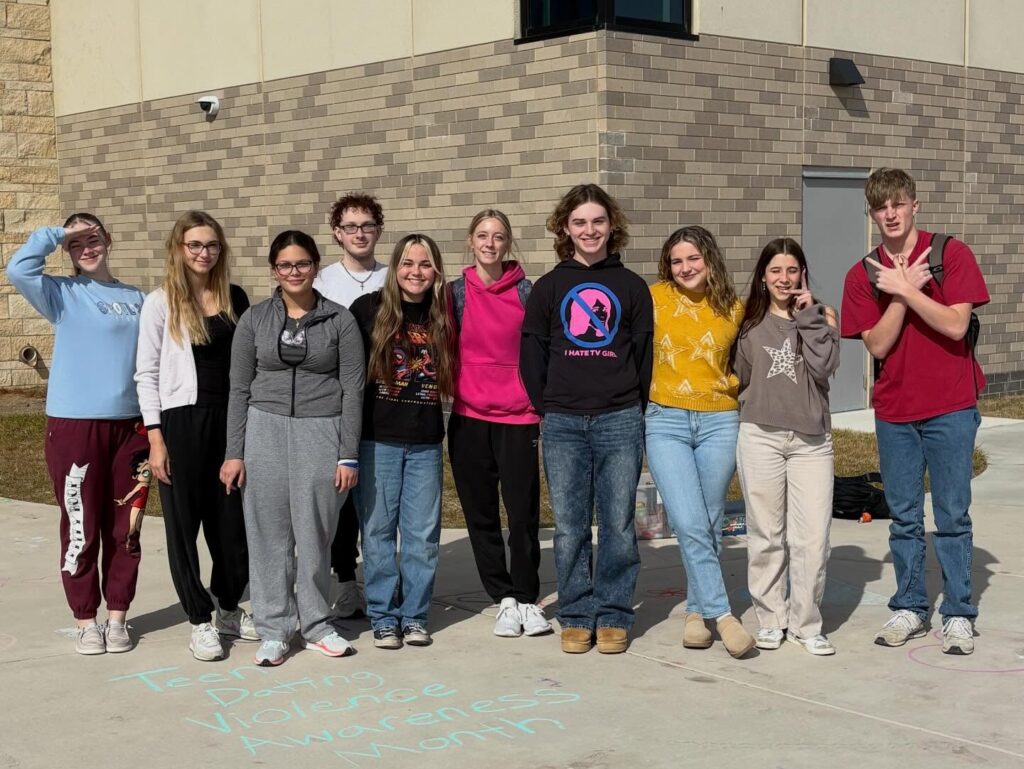
 Our SAB helps us understand what teens really need. They participate in and lead awareness events, help plan educational opportunities within the school, and give honest feedback that strengthens our prevention and response efforts. Most importantly, they bring student voice work that directly impacts their peers.
 For Keeley, our Co-President, awareness starts with defining what’s normal – and what isn’t.
 For teens, asking for help can feel overwhelming. Fear of not being believed, social consequences, or embarrassment can keep someone silent. Seeing peers lead this work helps break down those barriers.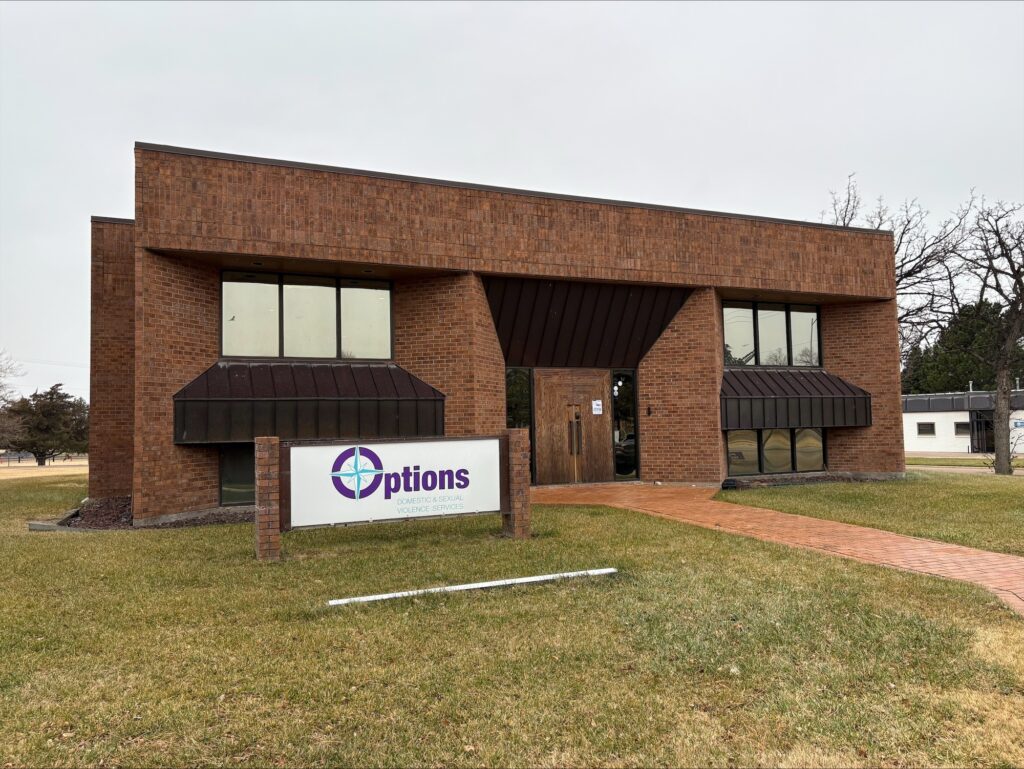


 That healing often begins with something simple: being welcomed.
 She also wishes the community understood the heart behind the work.
 Kristy and Krystal both emphasize that the Colby office thrives when the community is engaged and aware of what Options offers. “We can’t do this work alone,” Kristy explained. “Community partnerships, referrals, or even just asking questions about our services… All of that helps us reach survivors and grow our impact. When the community shows up with curiosity and support, it creates a safer, stronger environment for everyone.”
 Romanticized portrayals ignore the core reality: stalking is a form of abuse. It’s about control, intimidation, and fear. It can include repeated unwanted contact, monitoring online activity, showing up uninvited, making threats, or manipulating someone’s sense of safety. The person being stalked is not “flattered” – they are being targeted and violated.
 When shows or movies glamorize stalking, they influence social norms and perceptions. Young audiences, in particular, may start to believe that obsessive behavior is a sign of passion or dedication rather than abuse. This can make it harder for survivors to recognize that what’s happening to them is wrong and for bystanders to take it seriously.