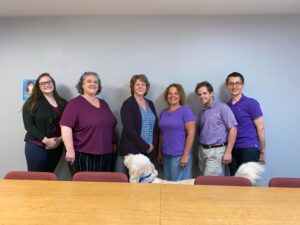

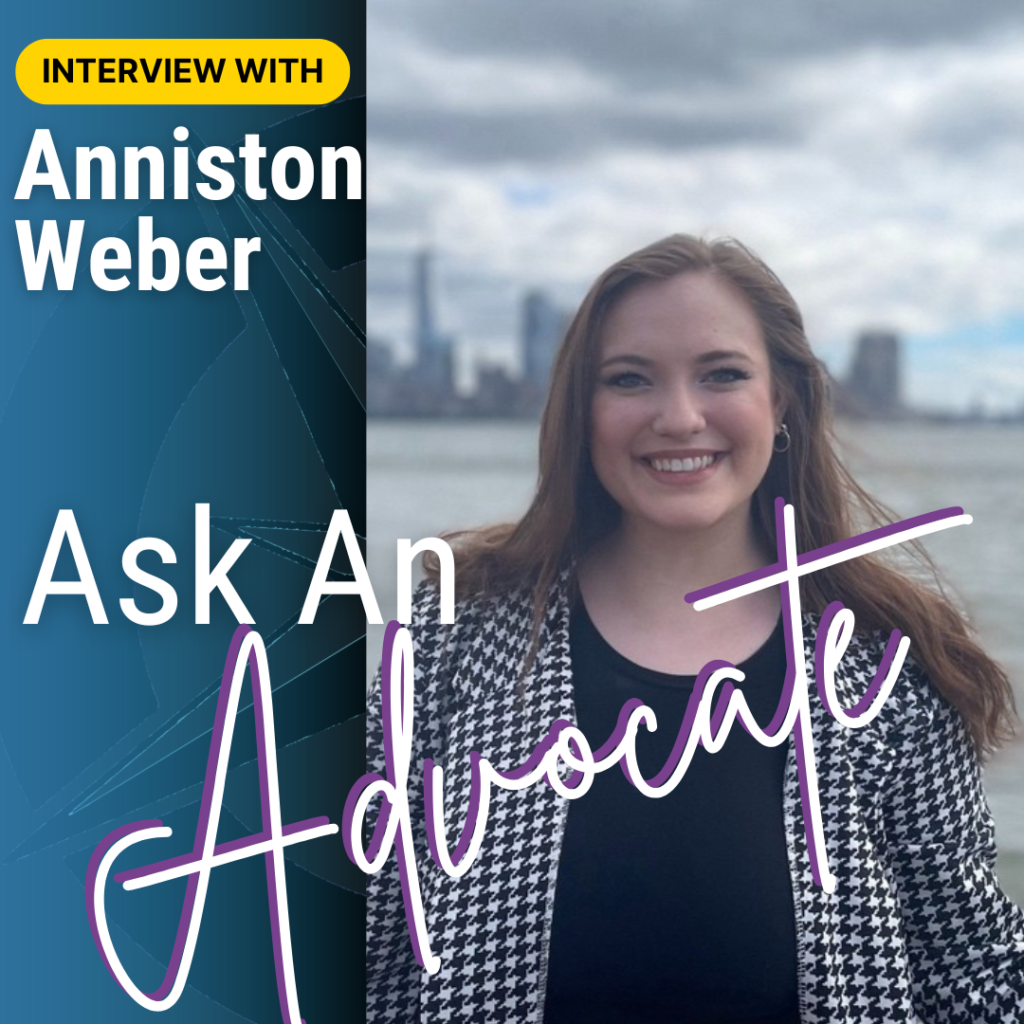
“Ask An Advocate” – interview with Campus Advocate Anniston Weber

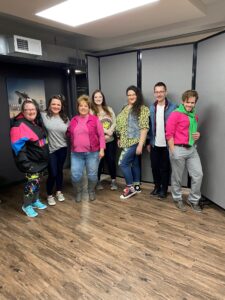
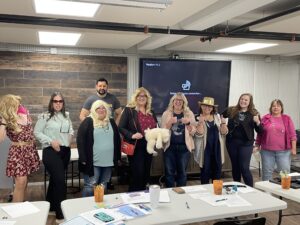
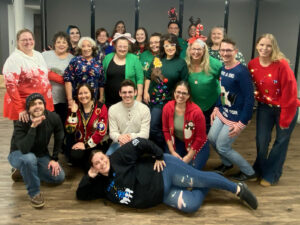
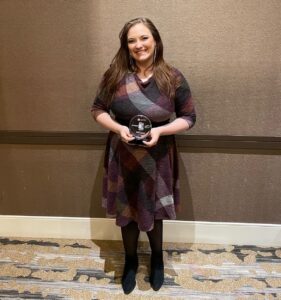
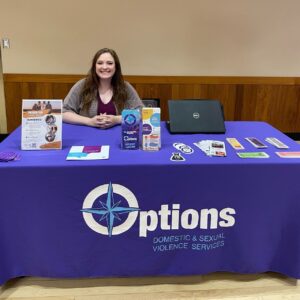
We’re excited to feature Anniston Weber in our ‘Ask An Advocate’ series! Anniston has been a vital part of Options for nearly five years, beginning her time at Options as an Evening Advocate and now serving as our Campus Advocate. Her passion for outreach shines through in everything she does, from engaging with students to organizing impactful events.

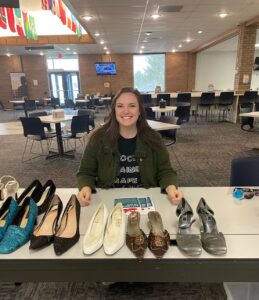
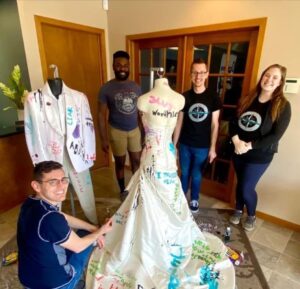
Anniston also leads our annual Rock Against Rape event, helping raise awareness in a powerful way. We’re thrilled to highlight the energy and dedication she brings to our team.

Can you describe your primary responsibilities as an advocate?

          “I am the Campus Advocate! I work directly with college and high school students experiencing sexual assault, stalking, human trafficking, or domestic violence. Within my role, I facilitate college sexual assault support groups, the Hays High Student Advisory Board, and I host and create a myriad of outreach and awareness events. Through this position I also get to be involved in Title IX committees and other campus-related coordinated response teams. I am also the Sexual Assault Response Team (SART) coordinator for Thomas and Russell counties, as well as the secretary for the Ellis County SART.” 
What is unique about your role?

          “The demographic of clients I see, for sure. I am heavily invested in sexual assault response and prevention – I would say that is where my expertise lies. Because I am on school campuses so regularly, I get to focus a lot of my attention on education and response as well. So, I am fortunate to be able to do a lot of public speaking and presentations within the schools. This is one of my favorite parts about the job because when people know we exist and are here to help it makes it easier for them to contact us!”

What do you believe is the most important aspect of your job as an advocate?

          “All of our services are free, voluntary, and confidential. Holding ourselves to those standards is so important to me. Particularly the confidentiality aspect of the job. When someone comes to you, they are often sharing things they’ve never disclosed to anyone before, so it is absolutely paramount to move forward at their pace. Plus, confidentiality protects safety – and one of the most dangerous times for a victim of domestic violence is when they choose to leave the abusive relationship.

I also believe it is important to be extremely empathetic and understanding. People going through trauma will react in ways you may not be used to seeing. We are responsible for keeping someone grounded and on-track while still maintaining an empathetic presence.”

What are some of the key challenges you face in your role, and how do you address them?

          “We have an 18-county service area. There are so many schools with so many different cultures within that space, and I want to be able to connect with them all – especially the rural ones! We live in such a rural part of Kansas that, oftentimes, we are faced with the challenge of people not believing that these issues are impacting them – but they are. It’s also hard to convince people in these smaller, tightly knit communities, to let me come in and talk to their kids about issues like sexual violence. I address this problem in particular by being approachable and understanding! For example, some schools may not want me to talk about rape culture or sexting. So, I’ll alter my presentations or chats to fit the needs of the school or teacher. The overall goal of going into schools is just to let students and parents know that we are here and available if they are ever in need of help.”
Is there a particular service or program offered by Options that you find especially impactful or meaningful? If so, why?

          “24/7 crisis response and hotline service. When I worked as an Evening Shelter Advocate, people would call later into the night just to chat or vent. Having someone available can feel like a lifeline to people – even if it is just to get their story off of their chest. Additionally, if someone needs to come in for a sexual assault nurse examination (or law enforcement interview) late into the night or very early in the morning, it is great that we are available to help! I also think our outreach programs are essential. Awareness bolsters accessibility, so it’s incredibly important for us to continue to do things to get our name and mission out there.”

Can you share a memorable success story (while maintaining confidentiality) that highlights the impact of the work you do?

          “I was working with a survivor that went through an extremely traumatic sexual assault experience. When she reached out to us, she felt at a complete loss and didn’t know what steps to take moving forward. She was also contemplating dropping out of school. I was able to connect her with those next steps and sit with her through a SANE, all of her law enforcement interviews, and all of her court appearances. She stayed in school, was able to find a safe and secure job, and is now absolutely thriving. I couldn’t be more proud of her – and I think that the support we offered along the way really impacted how her situation was handled.”

What has been your favorite training or professional development program you’ve attended/received since working with Options? What did you learn?

          “I had the amazing opportunity to go to the National Sexual Assault Conference in 2023. It was incredible. I was able to expand my horizons on how to discuss sexual assault with survivors as well as communities. I also learned about restorative justice and how to address sex work in regard to sexual assault and human trafficking.

Every year I am also able to attend the Heartland Campus Safety Summit hosted by Jana’s Campaign. This summit is always fabulous and teaches me so much on how to interact with students, staff, and Title IX!”
How do you practice self-care and prevent burnout, given the emotional intensity of the work?

          “I do my best to leave work at work. That is definitely easier said than done, though! I am always stressing the importance of boundaries with clients and coworkers. I absolutely believe in using personal and sick time when we need to – we have to give ourselves grace to recharge. After a particularly tough day, I like to unwind by lighting a candle, popping on my music, and reading a book (or I mindlessly scroll TikTok – either works).”

How does your position work with other community resources or organizations to support survivors?

          “Because I am so involved in SARTs, I get to work closely with SANE nurses, law enforcement, and people involved in the judicial systems. I am also always working closely with the colleges and high schools in our service area. Jana’s Campaign has also been a massive community partner as we work together on the Sexual Violence Prevention and Education grant provided to us through KDHE.”

How do you build trust and rapport with survivors?

          “I am honest with them. I have a direct communication style that I think many of our survivors appreciate – especially the ones in college and high school. I try not to “fluff,” my responses to them. I don’t beat around the bush when it comes to safety and how to access help. I think that this helps them to see that I want them to be independent and take control of their healing.”

In your opinion, what are the most pressing issues facing survivors of domestic and sexual violence today?

          “Not being believed. Somehow, we still exist in a culture that wants to immediately place blame on a victim rather than the perpetrator. I hear things like, “Was it rape or regret?” or “What did they do to provoke that?” often. There is a huge discussion about “false reports,” but the truth of the matter is that false reports of rape and domestic violence occur less often than false reports of other crimes. AND the term “false reports” also includes situations where the victim decided to drop the case, or a judge didn’t find enough evidence – not that it didn’t happen. Rape and domestic violence are incredibly underreported, and I desperately wish people understood how difficult the reporting process can actually be.”

Could you share any misconceptions about abuse that you encounter within your role?

          “Consent is an enthusiastic “yes!”

If you ask someone 33 times to have sex with you and they say “no” each time, but you wear them down to a point that they say “yes” to you on the 34th time – they aren’t consenting, you’ve coerced them into sex. Additionally, you may consent to sex, but not certain sex acts. If someone does something to you that makes you feel unsafe or harmed (or if you just want to stop in general), you can withdraw consent at any time. If someone does not heed your request to stop, that situation becomes a sexual assault.”

How do you measure success? What does a successful day or client case look like to you?

          “I love seeing the survivors I work with out in the community or on campus. It can be extremely hard to operate day-to-day after you’ve experienced something traumatic like sexual assault or domestic violence. So, seeing the people I’ve worked with going on with their daily lives, staying in school, maintaining a job, makes me feel incredibly proud. I also feel that sense of pride when after a presentation or event someone comes up to me and reaches out for services. That lets me know that our outreach is effective!”

What is your favorite way that Options raises awareness and educates the community about domestic and/or sexual violence?

          “I might be a little biased, but I love Rock Against Rape. Live music is something that we can all bond over. That, coupled with the messaging that alcohol doesn’t cause rape – rapists cause rape, is really important for our communities. I’m also a fan of all of the (free!!!) training opportunities we have for businesses or individuals throughout the year.”
What advice would you give to someone who wants to pursue a career in advocacy work for domestic and sexual violence?

          “Be prepared to make and maintain boundaries. This is a must in order to keep yourself from feeling compassion fatigue or burn out. If you feel overloaded, reach out for help. Take your time off. Take care of yourself when you feel sick.

People who are experiencing trauma may see everything as an urgent matter when it really is not. Be kind and empathetic but remember that it’s important not to treat everything like an emergency. The world won’t collapse if you can’t drop everything to bring a client their mail for the day.”

What do you wish people understood about your role? Or about working as an advocate in general?

          “Advocates deal with high-stress, high-stakes situations all the time. We may not experience physical exhaustion like people who are doing physically laborious jobs, but the mental toll can certainly have an impact.”

What keeps you motivated and passionate about your work, even when it becomes difficult?

          “The thought that even just one individual could be saved by contacting us or hearing one of our presentations keeps me going. Sometimes people don’t even realize that they are in abusive relationships or that they’ve been sexual assaulted until they hear us come in and talk about those situations. If I can positively impact the life of even one individual who has experienced this kind of trauma – it feels worth it.”

If you need any additional information, have a question, or a concern, feel free to reach out to Options at our 24-hour toll-free helpline 800-794-4624. You can also reach an advocate via text by texting HOPE to 847411 or click 24-Hour Chat with Options.

This grant project is supported by the State General Fund for Domestic Violence and Sexual Assault, sub-grant number 24-SGF-07, as administered by the Kansas Governor’s Grants Program. The opinions, findings, conclusions or recommendations expressed in this publication are those of the author(s) and do not necessarily reflect the views of the Office of Kansas Governor.
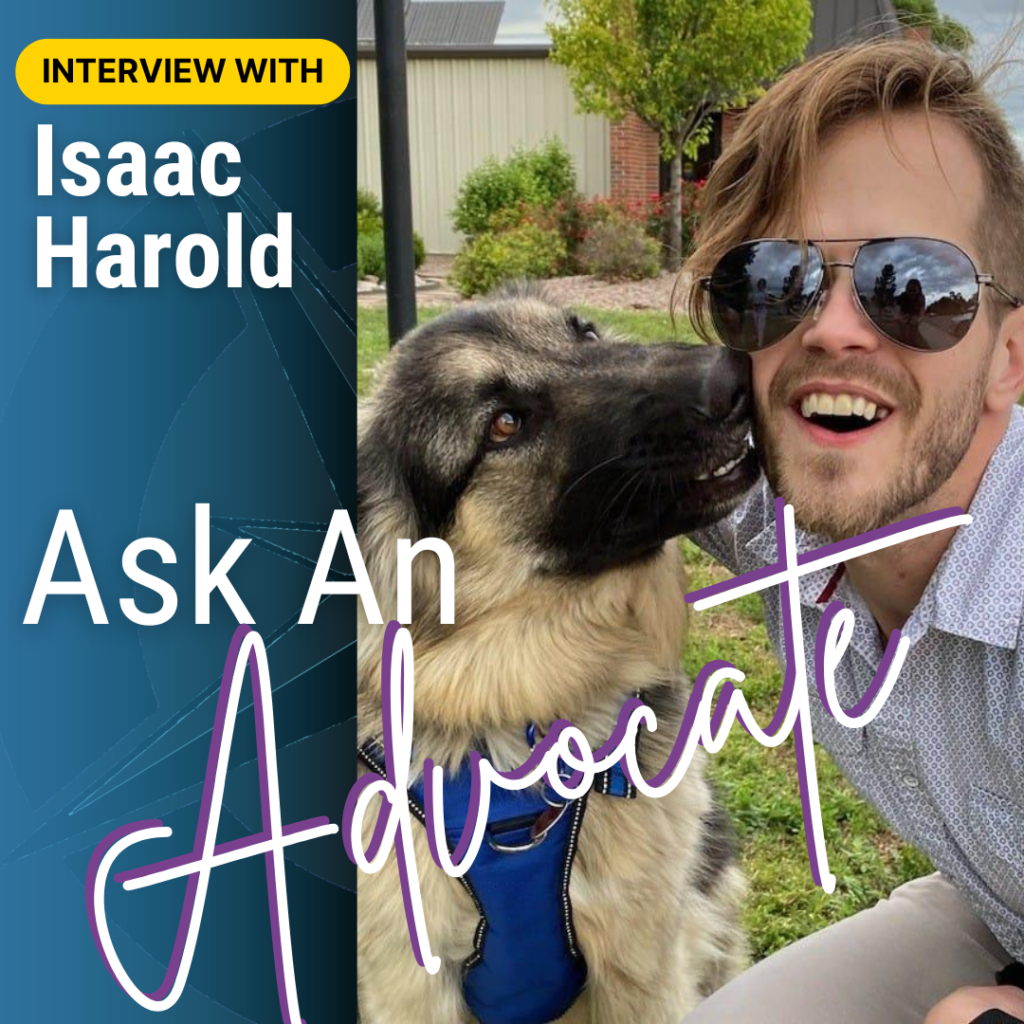
 

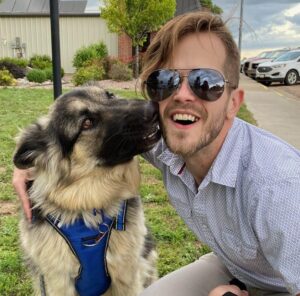
“Ask An Advocate” – interview with Community Services Coordinator Isaac Harold

We’re proud to spotlight Isaac Harold in our ‘Ask An Advocate’ series! With nearly nine years of dedication to Options, Isaac has worn many hats—starting as an Evening Shelter Advocate, then moving into roles like Family Advocate, Shelter Manager, Mobile Advocate, and now serving as our Community Services Coordinator.

His deep experience and commitment to our mission have made him an invaluable part of our team. We’re excited to share Isaac’s journey and the lasting impact he continues to make in the lives of those we serve as well as our staff.

What is unique about your role?

     “The Community Services Coordinator position was eliminated in 2019 and was reinstated in October 2023. My role is to provide guidance to Survivors and Advocates in our 18 counties.”

What do you believe is the most important aspect of your job as an advocate?

               “The most important aspect of my role as an Advocate is promoting resiliency in Survivors, and promoting growth-oriented opportunities to Advocates.”

What are some of the key challenges you face in your role, and how do you address them?

     “I am most challenged by emotional contagion and compassion fatigue. I face a lot of intense emotional responses. I remind myself every day that myself and countless others have faced these challenges, and others are just beginning their journey. My immediate support to a survivor could mean a seed of resiliency is planted in their minds. The seed will foster future growth beyond surviving to thriving!”

Is there a particular service or program offered by Options that you find especially impactful or meaningful? If so, why?

    “I have 2 (I couldn’t pick just 1). My first service choice is providing communities with awareness to help those impacted by abuse and trauma. My second pick is helping survivors and their fur babies. Organizations similar to our program will deny Survivors and their pets Shelter or Emergency Accommodations. As a result, a vast majority of survivor pet owners do not leave abusive associations and are susceptible to extreme physical violence including death.”

How do you practice self-care and prevent burnout, given the emotional intensity of the work?

     “I work out, walk my dogs, and I am an aspiring woodworker.”

How do you build trust and rapport with survivors?

     “Listen, help them find their breath and strengths to empower their resilience!”

Could you share any misconceptions about abuse that you encounter within your role?

     “The common misconception about the Cycle of Domestic Violence is that it is an actual cycle of tension building, aggression, and excessive affection. The Cycle is fast or slow and is unique for the Survivor. Also the common misconception about rape is that it only happens to young college girls and little boys. Rape can happen to anyone. Literally. You cannot foresee how your body will react to the trauma.”

What kind of changes or improvements would you like to see in the way society addresses domestic and sexual violence?

     “Social Justice is often ignored, and the majority of Survivor women are further disempowered by legalities created by old, white, and privileged men.”

What is your favorite way that Options raises awareness and educates the community about domestic and/or sexual violence?

     “Options Advocates promote resiliency, supporting Survivors as they become Thrivers. Options Advocates support community partners by promoting survivor safety with Emergency Responders and Community, State, and Nationwide organizations.”

What advice would you give to someone who wants to pursue a career in advocacy work for domestic and sexual violence?

     “There is no such thing as a “perfect” victim. Survivors are just as imperfect as you and me.”

What do you wish people understood about your role? Or about working as an advocate in general?

     “I wish people understood how Domestic and Sexual Violence foster violence and perpetration in their communities.”

How do you handle difficult situations? Personally, and professionally.

     “Professionally: I take a step back and breathe and walk away to collect my thoughts if the situation is appropriate. Personally: I breathe, walk or drive away, and journal.”

How has working at the agency impacted your personal views or perspectives on domestic and sexual violence (or stalking, or human trafficking)?

     “Trauma is unique to each survivor. A Domestic Violence Survivor may laugh after being hit by their partner. A rape Survivor may sit upright and rigid with a listless expression.”

Is there anything else you’d like to add?

      “Someone who is helping a Survivor access Options’ services is an Advocate. So is someone who helps a Survivor prepare before a PFA hearing to face the person who physically and mentally assaulted them. Or someone who helps a Survivor in poverty find resources. Or someone who is on our Student Advisory Board, someone who helps a Survivor during a Sexual Assault Nurse Examination, someone who is a Survivor who is Thriving and no longer just surviving.
Anyone can be an Advocate if they believe that abuse and rape do not follow the values of Communities.”

If you need any additional information, have a question, or a concern, feel free to reach out to Options at our 24-hour toll-free helpline 800-794-4624. You can also reach an advocate via text by texting HOPE to 847411 or click 24-Hour Chat with Options.

This grant project is supported by the State General Fund for Domestic Violence and Sexual Assault, sub-grant number 24-SGF-07, as administered by the Kansas Governor’s Grants Program. The opinions, findings, conclusions or recommendations expressed in this publication are those of the author(s) and do not necessarily reflect the views of the Office of Kansas Governor.
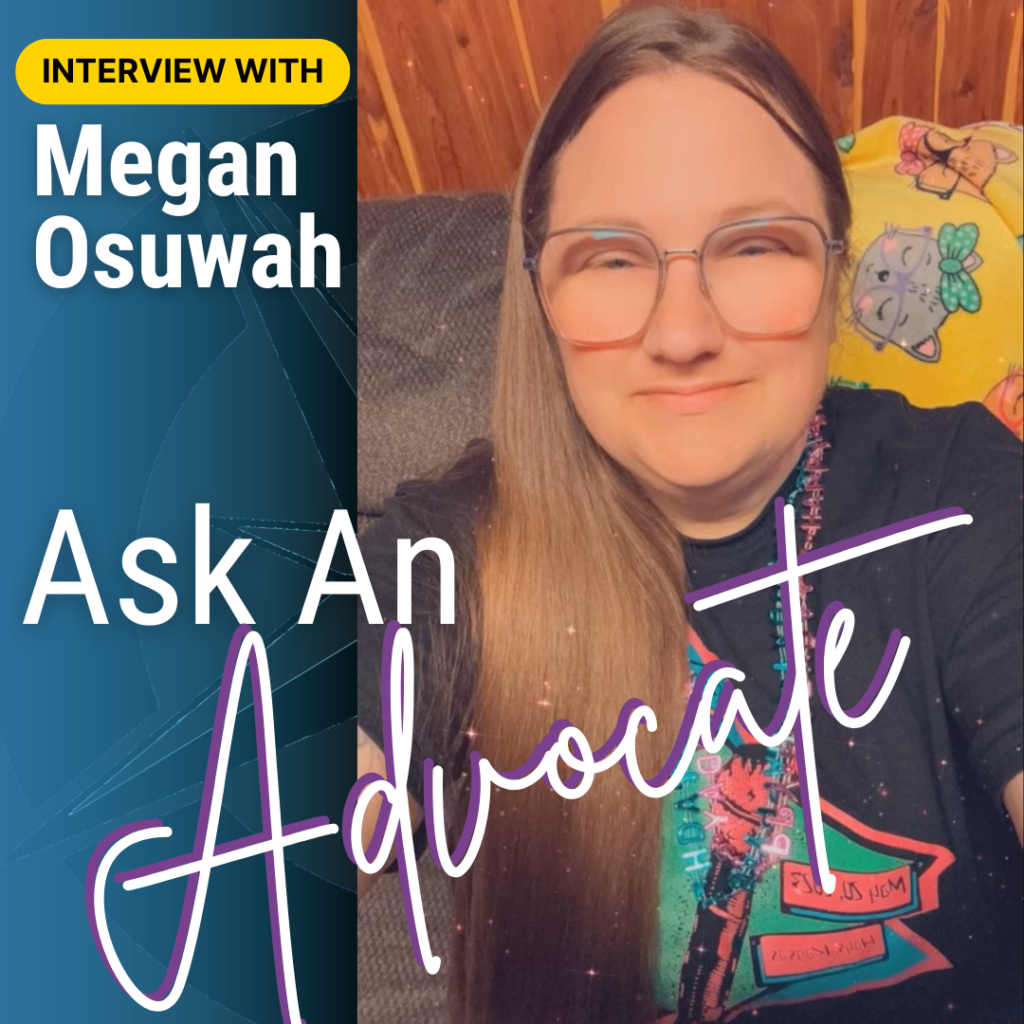
“Ask An Advocate” – interview with Shelter Services Coordinator Megan Osuwah

We’re delighted to highlight another incredible team member in our ‘Ask An Advocate’ series. This time, we’re featuring Megan Osuwah, our dedicated Shelter Services Coordinator. Megan has been with Options for “three beautiful years and counting,” starting as a Weekend Shelter Advocate before stepping into her current role.

Her passion for providing a safe and supportive environment for our survivors shines through in everything she does. We’re excited to share Megan’s journey and the impact she continues to make every day.

Can you describe your primary responsibilities as an advocate?

               “My title is Shelter Services Coordinator, and I oversee all things related to residential clients including emergency accommodation. My primary responsibilities include keeping the safe shelter stocked with hygiene, clothing, and food, ensuring the safety of residents, and supervising the Shelter Advocates.”

What is unique about your role?

               “As shelter advocates, we are fully immersed in survivor culture while we’re working.  The relationships we develop with those who let us work where they temporarily live can bring about very strong bonds.”

What do you believe is the most important aspect of your job as an advocate?

               “I think the most important aspect of my job as an advocate is addressing the immediate safety needs of each survivor. “

What are some of the key challenges you face in your role, and how do you address them?

“We have an 18-county service area, and only 14 bed spaces available for clients needing shelter. That being said, helping survivors navigate through congregate living while also trying to pick up the pieces of their lives is probably the most challenging. Sharing a room with someone you’ve never met, learning their culture, religious differences, etc.”

Is there a particular service or program offered by Options that you find especially impactful or meaningful? If so, why?

               “Our 24-hour crisis response, in particular our dedication to responding to the hospital or law enforcement center within 30 minutes of a SA or DV call. I just think it shows our overall commitment to survivor safety, our accessibility, and it builds trust within our community.”

Can you share a memorable success story (while maintaining confidentiality) that highlights the impact of the work you do?

               “We are one of the only VSP’s that accept Emotional Support Animals into their safe shelter, and because of that we have helped many individuals and families who would not have left their situation if it meant leaving their fur covered friends behind.”

How do you practice self-care and prevent burnout, given the emotional intensity of the work?

               “I have an 8-year-old son at home, so we do a lot of things together. He keeps us busy with gymnastics practice, theatre, science clubs, etc. I find that taking him to a movie two or three times a month really lets me sort of escape to another world for a while.  I read a fair amount. Also, naps!”

How do you build trust and rapport with survivors?

               “I tend to take a peer-to-peer approach with most survivors. I try to let them know that I’ve been where they are and that I’m going to be there to help them navigate whatever comes next. I understand that with some the trust may come easy, and with others it may never come.”

Could you share any misconceptions about abuse that you encounter within your role?

               “That men cannot be victims of abuse. That it only happens in certain social classes. That it wasn’t rape if the victim didn’t say no or struggle.”

In your opinion, what are the most pressing issues facing survivors of domestic and sexual violence today?

               “Access to affordable housing and childcare!”

How do you measure success? What does a successful day or client case look like to you?

               “Success with survivors comes in all different shapes, sizes, and colors! Success might be that you were able to help a struggling mom of 3 take her kids to school. It might look like seeing the beaten down and bruised survivor that hasn’t left the safe shelter in a week catch the bus to the grocery store.”

What kind of changes or improvements would you like to see in the way society addresses domestic and sexual violence?

               “Many victims remain in abusive situations because they rely financially on their abusers. By increasing access to employment opportunities, housing, and financial resources, survivors can gain the support they need to break free from abusive relationships.”

What is your favorite way that Options raises awareness and educates the community about domestic and/or sexual violence?

               “Definitely RAR (Rock Against Rape)! I think it’s amazing how Anniston coordinates this event every year to spark conversations about rape culture in our community.”

What advice would you give to someone who wants to pursue a career in advocacy work for domestic and sexual violence?

               “It can be really tough to hear about people’s trauma.  Having a strong sense of self, being able to set and keep boundaries, and having established ways to process your own feelings will be very helpful in this field. If you’re not super sure about this particular path, volunteering first is a great way to start!”

What do you wish people understood about your role? Or about working as an advocate in general?

               “I wish people understood that after a person is victimized and they are finally in a place that’s safe to recover in, that recovery doesn’t look the same for each person. One person or family might bounce back into life with no problems, and another person might not be able to care for themselves for a while. An advocate’s job in shelter is not to tell people how to live or what choices to make, but to show our survivors that someone does care by helping with those tasks that seem impossible.”

How do you handle difficult situations? Personally and professionally.

               “I’m a very patient person. And my patience usually allows for me to be able to see different sides to each situation. It took me a long time to be able to move from passive to assertive, and I’m proud of my ability to stay calm and speak clearly in situations that are elevated or even awkward.”

What keeps you motivated and passionate about your work, even when it becomes difficult?

               “Options was here for me during my crisis and trauma recovery. They never turned me away, even when my only coping mechanism turned into addiction. They didn’t quit on me when it became difficult.  That is my motivation, that is where my passion comes from!”

If you need any additional information, have a question, or a concern, feel free to reach out to Options at our 24-hour toll-free helpline 800-794-4624. You can also reach an advocate via text by texting HOPE to 847411 or click 24-Hour Chat with Options.

This grant project is supported by the State General Fund for Domestic Violence and Sexual Assault, sub-grant number 24-SGF-07, as administered by the Kansas Governor’s Grants Program. The opinions, findings, conclusions or recommendations expressed in this publication are those of the author(s) and do not necessarily reflect the views of the Office of Kansas Governor.

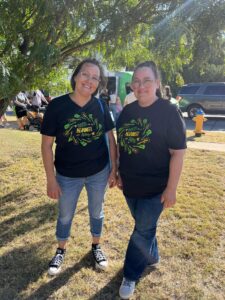
“Ask An Advocate” – interview with Evening Shelter Advocate Kylie Rowe

We’re thrilled to continue shining a spotlight on the dedicated advocates who work tirelessly to support our clients on their journey to safety and healing. Our ‘Ask An Advocate’ series celebrates the incredible individuals making a difference every day.

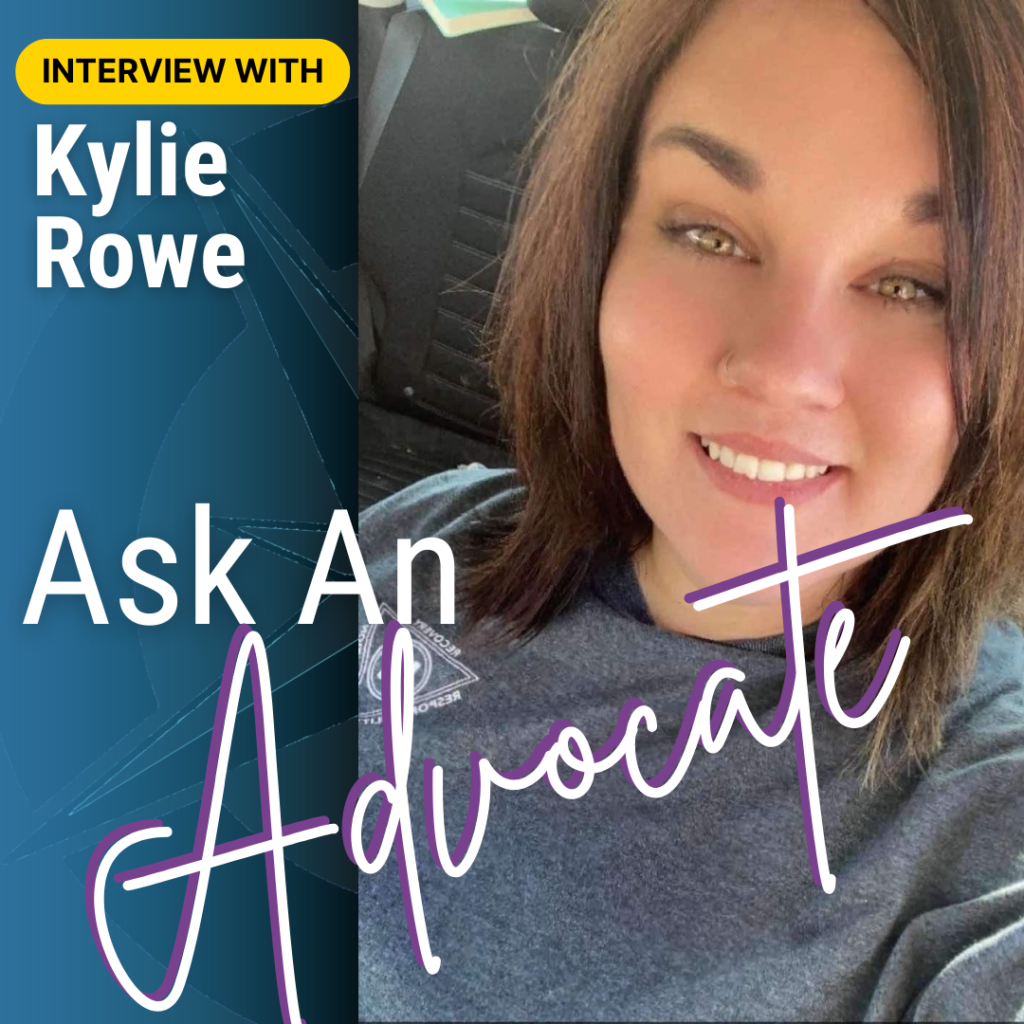
In this edition, we’re excited to feature Kylie Rowe, who has recently transitioned into the role of Evening Advocate after nearly a year of compassionate service as an Overnight Advocate. Kylie’s commitment to our mission is inspiring, and we’re eager to share her story and the invaluable work she does.

What do you believe is the most important aspect of your job as an advocate? 

               “Being a safe person that someone can trust.”

What are some of the key challenges you face in your role, and how do you address them? 

               “Sometimes it’s disputes between survivors and other times it’s as simple as looking for the missing 10-pound bag of sugar but no matter the challenge, I can lean on and go to my supervisor and coworkers.”

Is there a particular service or program offered by Options that you find especially impactful or meaningful? If so, why? 

               “The financial help we offer to get survivors back home, whether it be in a different state or just assisting them in finding housing locally.”

Can you share a memorable success story (while maintaining confidentiality) that highlights the impact of the work you do? 

               “My first SANE [Sexual Assault Nurse Exam] exam that I was called in for was something I was nervous about but turned into the fuel to my fire. An individual was not only assaulted but was left with nothing – not even shoes on their feet – and just a wish to get back home to their mom which was multiple states away. Being able to say “WE WILL HELP YOU GET THERE” and mean it was an amazing feeling. It was amazing to witness her being able to have an advocate assist her in getting her own belongings (in a safe manner) and be able to send her own her way home with clothes on her back and food in her stomach. Every story is a success if you can take someone and put them into a safe space.”

What has been your favorite training or professional development program you’ve attended/received since working with Options? What did you learn? 

               “I learned the most during a presentation from a batterer’s prevention organization, it helped to understand the mind of an abuser.”
How do you practice self-care and prevent burnout, given the emotional intensity of the work? 

               “I make sure to allow myself moments of solitude, if I catch myself becoming negative or less empathetic than I do things to cleanse the mind. I’m a firm believer in messy space messy mind; so often my selfcare is some deep cleaning while listening to positive encouraging podcasts.”

In your opinion, what are the most pressing issues facing survivors of domestic and sexual violence today? 

               “I think a big issue is lack of support from the law. I once had a survivor who was sexually assaulted and contacted 911 through text. They safely got her out of there via ambulance, but the perpetrator was not arrested even though there were physical, visible injuries on her body and the day previous he was in court for a domestic violence case where he had caused a young woman to get stitches in the side of her head.”

How do you measure success? What does a successful day or client case look like to you? 

               “A successful day for me is knowing that every conversation/situation I tried my hardest, but nothing beats the appreciation and gratitude that we receive, even if it sometimes looks like just a smile to someone else.”

What is your favorite way that Options raises awareness and educates the community about domestic and/or sexual violence? 

               “Presentations, events, social media, flyers …every way under the moon.”

What advice would you give to someone who wants to pursue a career in advocacy work for domestic and sexual violence? 

               “There will never be too many advocates in the world but please make sure you have also taken the time to heal.”

How do you handle difficult situations? Personally, and professionally.  
               “Pray it out.”

How has working at the agency impacted your personal views or perspectives on domestic and sexual violence (or stalking, or human trafficking)? 

               “I’ve learned to be safer and more aware of my surroundings, people don’t want to believe this sort of stuff is happening, but it is!”

What keeps you motivated and passionate about your work, even when it becomes difficult? 

               “I think my biggest motivation would be my own past experiences, I grew up in a very violent household and grew up watching my mother get abused physically most of my life, which had a very negative effect on my mental health. At the age of 17 I entered an abusive relationship, and I stayed for 8 years. Days can get difficult, but nothing is more rewarding than helping to break the cycle.”

If you need any additional information, have a question, or a concern, feel free to reach out to Options at our 24-hour toll-free helpline 800-794-4624. You can also reach an advocate via text by texting HOPE to 847411 or click 24-Hour Chat with Options.

This grant project is supported by the State General Fund for Domestic Violence and Sexual Assault, sub-grant number 24-SGF-07, as administered by the Kansas Governor’s Grants Program. The opinions, findings, conclusions or recommendations expressed in this publication are those of the author(s) and do not necessarily reflect the views of the Office of Kansas Governor.


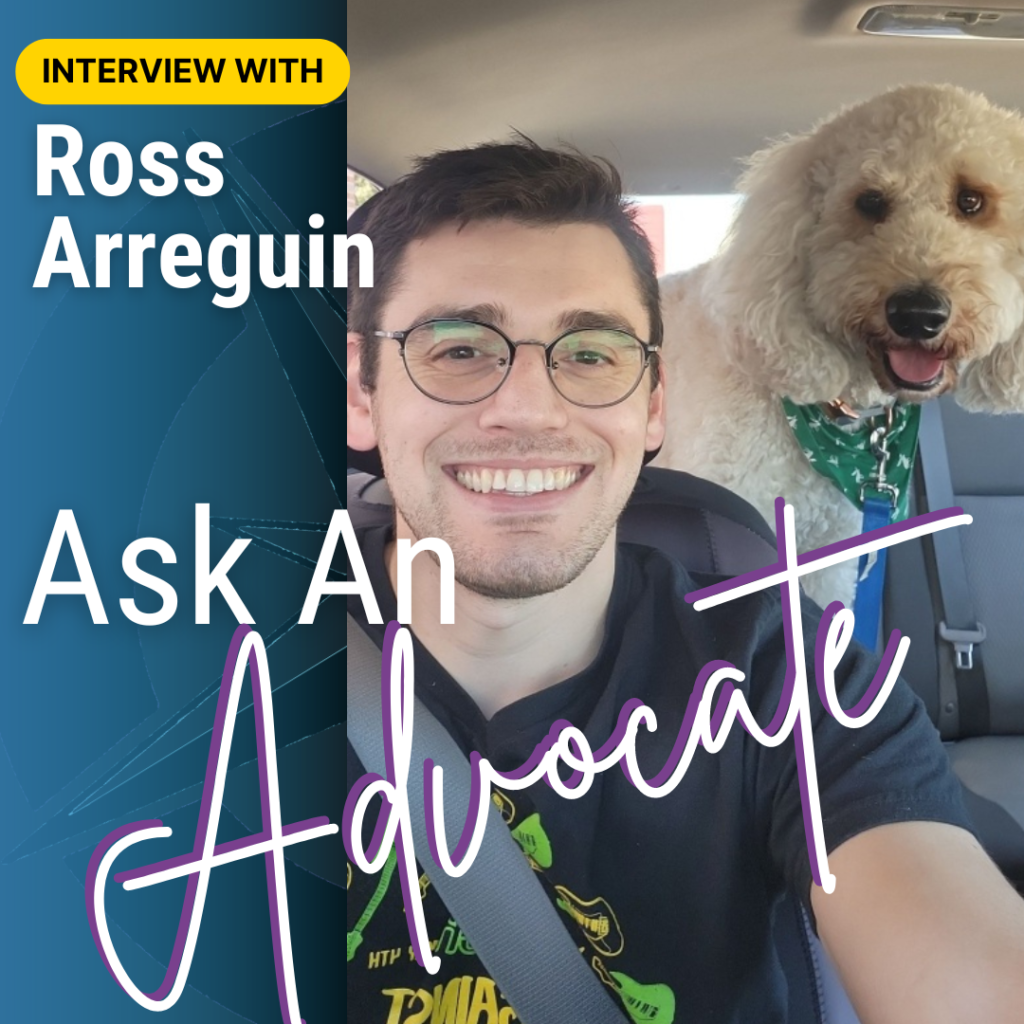
“Ask An Advocate” – interview with Community Advocate Ross Arreguin

October is Domestic Violence Awareness Month, and at Options, we’re excited to highlight some of the amazing advocates who work directly with clients to ensure their safety and healing. Our ‘Ask An Advocate’ series showcases these incredible individuals.

This feature spotlights Ross Arreguin, our Mobile Advocate at Options Domestic and Sexual Violence Services. With nearly 3 years of experience, Ross began as an Overnight Shelter Advocate, giving him valuable insight into both shelter life and the challenges faced by community-based survivors.

Can you describe your primary responsibilities as an advocate?

               “As the Community Advocate that’s based in Hays, I help any walk-ins and help monitor all of our hotlines. My other main duty is to travel to our eastern eight counties. While traveling to these counties, I make sure all our materials are up to date, provide a physical presence in these rural counties, and build/maintain our community relationships within the rural counties.”

What is unique about your role?

               “The travel aspect of my job allows me to connect with other organizations and agencies involving victim advocacy and services. I have worked alongside the KBI (Kansas Bureau of Investigation) and CAC (Child Advocacy Center) in cases in the rural communities.”

What do you believe is the most important aspect of your job as an advocate?

               “Being informed and patient. We’re usually the ones that survivors lean on in their most desperate times, so knowing how to help a survivor deescalate and having the knowledge to help them in that moment helps them heal more effectively.”

What are some of the key challenges you face in your role, and how do you address them?

               “Mental health: some survivors have developed some mental health conditions (PTSD, anger issues, depression, suicidal thoughts, etc.) and I’m not qualified to handle them. The best that I’m able to due to is attempt to deescalate and refer them to those who can help them.

Financial Resources: when a survivor qualifies for the extremely limited financial support that Options can provide, referring to other organizations is what I have to do. However, those resources are either limited to certain locations, also have criteria to meet, or are out of funding.”

Can you share a memorable success story (while maintaining confidentiality) that highlights the impact of the work you do?

               “I spoke with a client as a follow-up after the weekend, things had escalated by the time I was able to get a hold of them. After hearing the updates, I insisted that they go to the hospital for a strangulation examination. After a bad experience in their community, they came to HaysMed for a much better experience. We remained in touch, and when the virtual hearing came for the PFA, it was a quick and satisfying experience for the client.”

What has been your favorite training or professional development program you’ve attended/received since working with Options? What did you learn?
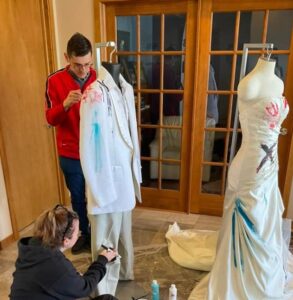
               “The Kansas Crime Victims’ Rights Conference, it’s a great networking event of similar agencies, lawyers, nurses, law enforcement, and social workers. I’ve learned how provide the needed support to victims in the court system and how to be a better organization by not siloing information.”

How do you practice self-care and prevent burnout, given the emotional intensity of the work?

               “Work remains at work. If a client of mine comes in and it isn’t an emergency, I ask them if we can schedule an appointment later if I am busy with other matters. I utilize my vacation time almost monthly to ensure plenty of rest and breaks from work.”

How do you build trust and rapport with survivors?

               “Being patient and down to business. Due to their experience, being grounded and keeping them on track helps them keep moving forward. This means deescalating them when they spiral, keep them focus on the tasks on hand, and being patient with them with the less time sensitive matters.”

How do you measure success? What does a successful day or client case look like to you?

               “If they take what I’ve provided with them. A lot of my work is referrals, so if they take them with them, I know they have the information to decide a path forward. I don’t know if they will reach out the referrals, but they have the information to do so, and that’s all that I can do.”

What kind of changes or improvements would you like to see in the way society addresses domestic and sexual violence?

               “Believe the survivors when they come forward. People aren’t lying about this when they are able to give the details. However, a lot of people or communities do not believe that this is something ‘that happens in their community’ or the abuser ‘just doesn’t act like that.’”

What advice would you give to someone who wants to pursue a career in advocacy work for domestic and sexual violence?

               “Know how to time manage and be sure you know how to take care of your mental and physical health.”

How has working at the agency impacted your personal views or perspectives on domestic and sexual violence (or stalking, or human trafficking)?

               “It has provided me the knowledge of how to help those in these situations. I’ve personally used this to help provide a close relationship of mine the tools for them to heal from their personal domestic violent situation.”

What keeps you motivated and passionate about your work, even when it becomes difficult?
               “I enjoy helping people, and my peers are what keep me motivated to stay.”

Is there anything else you’d like to add?

               “Advocacy is tough, but it’s rewarding when there are successes. However, due to the stressful nature of the job, boundaries are the biggest thing to enforce with clients and peers as that’ll keep you sane.”

If you need any additional information, have a question, or a concern, feel free to reach out to Options at our 24-hour toll-free helpline 800-794-4624. You can also reach an advocate via text by texting HOPE to 847411 or click 24-Hour Chat with Options.

This grant project is supported by the State General Fund for Domestic Violence and Sexual Assault, sub-grant number 24-SGF-07, as administered by the Kansas Governor’s Grants Program. The opinions, findings, conclusions or recommendations expressed in this publication are those of the author(s) and do not necessarily reflect the views of the Office of Kansas Governor.

Domestic violence at the ballot box

Election seasons are periods of heightened tension – especially within our current political climate.  Political debates, rallies, and intense media coverage have been filling the public sphere for quite some time now. These are times when emotions run high, as individuals express their beliefs and hopes for the future.

However, for some, the pressures of the political landscape have a far more personal and terrifying impact. Domestic violence, a pervasive issue across societies, often sees a disturbing increase during these times. This increase isn’t just about the general stress associated with elections; it’s also about the ways abusive partners can manipulate and control their victims, including coercing them into voting a certain way.

Each election, survivors of intimate partner violence face unique barriers that can prevent them from voting.

Photo by Claudia Wolff on Unsplash

During election seasons, the atmosphere in households can become charged, especially when partners hold differing political views. The intensity of public discourse can exacerbate existing tensions within relationships. Stressful conversations about politics can serve as triggers for violent or controlling behavior, particularly for those with an already established history of abuse. Elections can also amplify existing power dynamics, providing abusive partners with another tool to exert control over their victims.

Research has shown that times of societal stress, such as economic downturns or natural disasters, often see a spike in domestic violence cases. Elections, with their accompanying anxiety, divisiveness, and uncertainty, can similarly act as catalysts. For abusive partners, the charged political environment can become a pretext to exert even more dominance over their victims, often using the election itself as a means of control.

One of the most insidious ways abusive partners may exert control during election seasons is by coercing their partner into voting a certain way. In a healthy relationship, partners may discuss politics and even disagree without fear. However, in abusive relationships, political disagreement can become dangerous. An abusive partner may try to force their beliefs onto their partner, making threats or using violence to ensure compliance. This coercion can take many forms, from verbal intimidation and emotional blackmail to physical violence and surveillance.

For some, the mere act of voting differently from their partner can be seen as an act of rebellion, leading to severe consequences. The abusive partner may view their victim’s political stance as a threat to their control or a challenge to their authority. In these scenarios, the act of voting becomes not just a civic duty but a dangerous ordeal. Victims may feel they have no choice but to comply with their abuser’s demands to avoid conflict or harm.

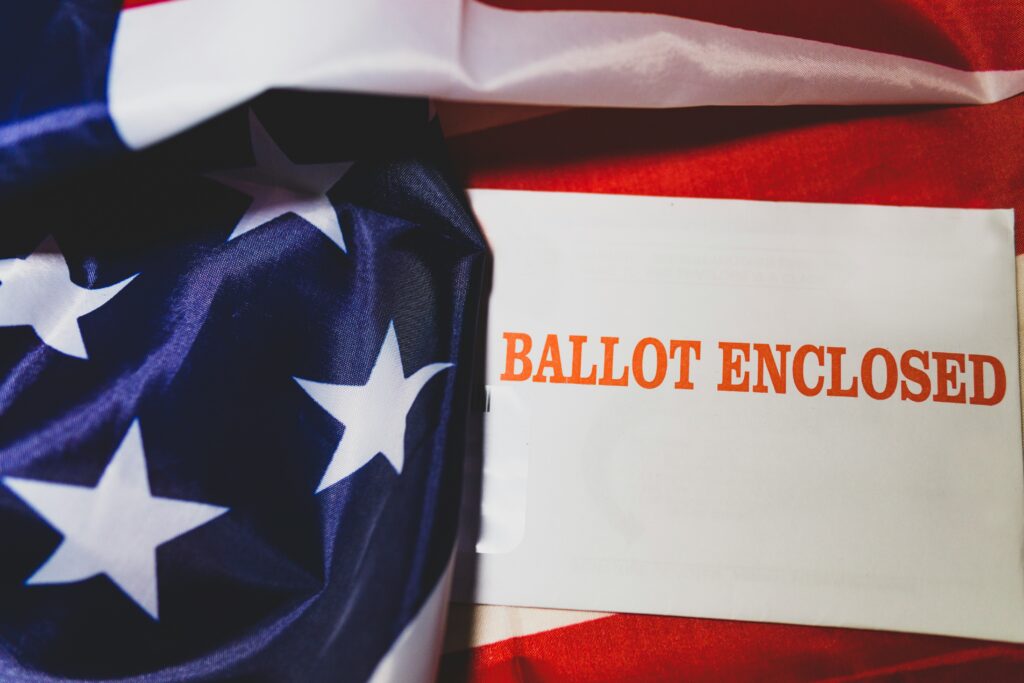
It’s crucial to stress that voting is a private matter. No one is with you inside of the ballot box. In the United States, the right to a secret ballot is a cornerstone of the democratic process. This means that when voting in person, no one can see how you vote. In an abusive relationship, this privacy can be a lifeline. Even if an abusive partner pressures their victim to vote a certain way, the victim can still vote according to their own conscience in the privacy of the voting booth.

Voting in person can provide a degree of safety and autonomy that voting by mail may not. When you vote in person, you do so in a private booth, where no one, not even the election officials, can see your ballot. This privacy ensures that your vote reflects your true beliefs and choices, free from external influence or coercion. If you’re in an abusive relationship, knowing this can be empowering. It’s a reminder that, despite the control an abusive partner may exert in other areas of life, your vote is ultimately your own.

While voting by mail is a convenient and essential option for many, it can pose specific dangers for those in abusive relationships. Voting by mail requires receiving and returning a ballot, processes that an abuser can easily monitor. In such cases, an abusive partner may attempt to “manage” how their partner votes, using surveillance and coercion to ensure that the mail-in ballot reflects their own political preferences.

In some situations, abusers may even fill out the ballot for their victim or force them to vote under direct supervision. This level of control is a violation of both personal autonomy and the democratic process. It strips the victim of their right to participate in elections freely and safely, further entrenching the power imbalance in the relationship.

For victims of domestic violence, the act of voting by mail can become a tool of control and fear rather than an expression of freedom. Therefore, it’s crucial to understand the risks and explore options that can protect the victim’s autonomy, such as voting in person when it is safe and possible to do so.

Photo by Arnaud Jaegers on Unsplash

Safety Planning for Voting

If you are in an abusive relationship and concerned about how to vote safely, there are steps you can take to protect yourself:

  • Vote In Person: If it’s safe to do so, consider voting in person. Remember that your vote is private, and you have the right to choose freely once inside the voting booth. It is also recommended to vote when the abuser is busy (like at work or away from the home) if possible.
  • Early Voting: Many areas offer early voting. This option can provide more flexibility, allowing you to choose a time to vote when it’s safe.
  • Seek Support: Reach out to domestic violence support organizations, like Options for advice. They can provide guidance on how to navigate voting safely and may offer additional resources for protection. You can also ask a friend to support you by having them drive you to the polls.
  • Research ahead of time: If it is safe for you to do so, researching political candidates and issues to be voted on ahead of time will make the process of voting significantly quicker.
  • Practice self-care before and after voting: Take a moment to yourself to calm your nerves and relax before and after casting your ballot.
  • Voting by Mail Safely: Consider your vote-by-mail options. For some, this may be the most convenient and safest way to vote. Particularly if you think your abusive partner may keep you from voting in-person.

The democratic process depends on the free and private participation of every individual. When someone is forced to vote a certain way under the threat of violence or control, it undermines the integrity of elections and the principles of democracy itself. Every person deserves the right to vote according to their conscience, free from intimidation or fear.

If you need any additional information, have a question, or a concern, feel free to reach out to Options at our 24-hour toll-free helpline 800-794-4624. You can also reach an advocate via text by texting HOPE to 847411 or click 24-Hour Chat with Options.

Written by Anniston Weber

This project was supported by subgrant number 24-VAWA-07 awarded by the Kansas Governor’s Grants Program for the Office on Violence Against Women, U.S. Department of Justice’s STOP Formula Grant Program. The opinions, findings, conclusions, and recommendations expressed in this publication/program/exhibition are those of the author(s) and do not necessarily reflect the views of the Office of the Kansas Governor or the U.S. Department of Justice.